
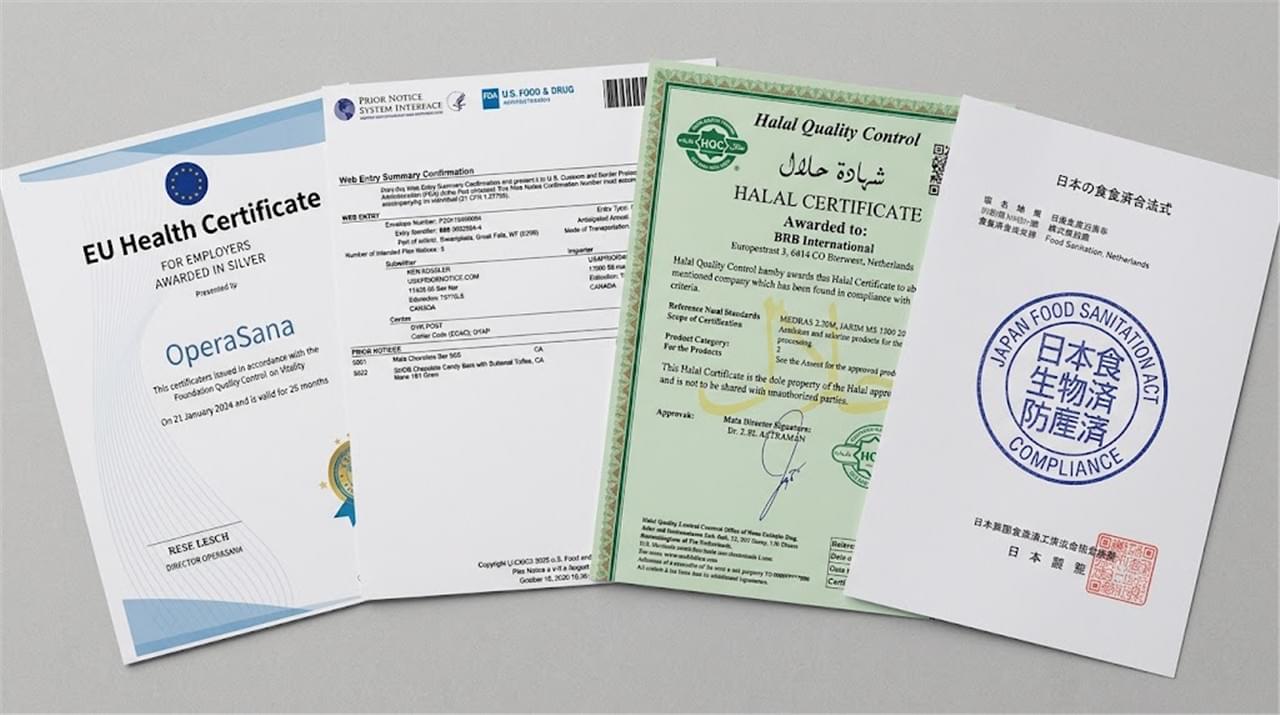
Honey import regulations have made this staple one of the most heavily policed food commodities on the planet — and the paperwork proves it. Food safety rules, origin certification, product-specific testing, and four distinct regulatory philosophies stack into a documentation burden that quietly sinks unprepared buyers. A container that clears Rotterdam in a week can sit in Tokyo customs for three simply because nobody planned for the required testing window.
Here’s the market-by-market reality for the world’s four major honey import destinations. For how these rules connect to supplier selection, start with our Global Honey Sourcing Guide.
Table of Contents
Toggle🇪🇺 EU: The Deepest Honey Import Regulations Framework in the World
No market documents honey like the EU. Four pre-import conditions must all be true before a drum ships:
| Requirement | Details |
|---|---|
| GACC registration | Mandatory for China-origin honey; facility must appear on the EU-approved China export list |
| Exporter approval | Origin country authority must certify the facility for EU export |
| Export health certificate | Issued by origin government in the specific EU format |
| Residue monitoring | Origin country must hold an EU-approved national residue monitoring plan |
Then the product itself has to clear the lab. The pesticide requirement runs against the full EU MRL list — thousands of compounds, with a default limit of 0.01 mg/kg for anything unlisted. Chloramphenicol and nitrofuran metabolites carry zero tolerance in practice, oxytetracycline caps at 100 µg/kg, HMF at 40 mg/kg (80 for tropical origins), and moisture at 20%. The EU Honey Directive 2001/110/EC anchors the labeling layer: country of origin is mandatory on retail packaging, and blends must say so — “blend of EU honey,” “blend of EU and non-EU honey,” or the specific countries listed. On the B2B side, your commercial invoice must state every origin country accurately.
🇺🇸 US: FDA-Driven Honey Import Regulations With a Duty Trap
The US FDA honey compliance stack is less prescriptive than the EU’s but puts the verification burden squarely on the importer:
| Requirement | Details |
|---|---|
| FDA facility registration | Foreign exporter must be registered with FDA |
| Prior notice | Filed before the shipment arrives |
| FSVP | Importers must run a Foreign Supplier Verification Program |
| Country of origin | Mandatory on commercial invoice and retail labeling |
Two US-specific traps deserve attention. First, anti-dumping duties: multiple origins face current AD/CVD orders, and the duty status changes — verify before you price the deal, not after. Second, HTS classification: natural honey sits under 0409.00, and getting it wrong delays clearance.
US law doesn’t prescribe EU-style testing, but FSVP responsibility means industry practice fills the gap: an EU-MRL-benchmarked pesticide panel, an antibiotic screen (chloramphenicol, nitrofuran metabolites, oxytetracycline at minimum), and IRMS C4 adulteration testing. Serious US importers run EU-grade panels voluntarily — the liability stays with them either way, and the FDA’s import guidance makes clear who it lands on.
🕌 Gulf: HALAL Rules Lead the Region’s Honey Import Regulations
Across Saudi Arabia, UAE, Kuwait, Qatar, Bahrain, and Oman, one gate comes before all others: HALAL certification is mandatory for honey sold in GCC markets. And it’s stricter than a logo on a box — the certificate must come from a body recognized by the destination country, cover the specific production facility and product, and trace chain-of-custody from farm to export point. The certification layer is covered in depth in our HALAL and Organic Certifications guide.
Beyond that gate, the GSO standard adopts the Codex honey baseline and adds: a health certificate from the exporting country’s authority, Arabic labeling (requirements vary by state), and shelf-life labeling. The document set is predictable — invoice (Arabic translation in some states), certificate of origin, HALAL certificate, health certificate, packing list, and CoA. Missing any one of the six stalls the shipment at port.
🇯🇵 Japan: The Strictest Pesticide Net of All
Japan’s Positive List System (2006) is where honey import regulations get unforgiving. Any compound without a specific Japanese MRL defaults to 0.01 ppm — effectively zero tolerance — and some Japan-specific MRLs are stricter than both EU and US limits. The practical consequence trips up experienced buyers: a batch fully compliant with EU MRLs can still fail in Japan. The Ministry of Health, Labour and Welfare publishes the current list, and it’s the version that matters, not the EU’s.
Operationally, Japan demands its own pesticide panel — including compounds absent from EU panels — run by a JFSL-recognized or equivalent laboratory. Physical inspection under the Food Sanitation Act is possible, and repeated violations trigger an enhanced inspection regime you don’t want to be in. Budget the timeline too: Japanese pesticide analysis takes 10–15 business days minimum, so plan for the customs hold rather than pretending your honey import regulations checklist ends at the factory gate.
📋 Honey Import Regulations Compared: One Playbook, Four Filters
| Market | Gatekeeper Rule | Testing Burden | Signature Risk |
|---|---|---|---|
| EU | 4 pre-import conditions + EU format health cert | Full EU MRL + antibiotic zero-tolerance | Unapproved facility or origin |
| US | FSVP + prior notice | Industry-standard panels (EU-benchmarked) | Anti-dumping duty surprise |
| GCC | HALAL certificate with chain-of-custody | Codex baseline (GSO) | Unrecognized cert body |
| Japan | Positive List, 0.01 ppm default | Japan-specific panel, 10–15 days | EU-compliant batch failing locally |
Read the four rows together and the pattern is clear: each market punishes a different blind spot. Europe punishes paperwork shortcuts, America punishes duty assumptions, the Gulf punishes certification gaps, and Japan punishes the assumption that EU compliance transfers. The vendors who clear all four are the ones who build the documentation package per market before the purchase order — exactly the discipline our adulteration testing and prevention protocol and quality standards framework are built around.
For a market-specific compliance documentation package, our export compliance team can assemble what your destination requires.
 English
 Arabic
 French
 German
 Portuguese
 Russian
 Spanish
 Japanese
 Korean