Natural Sweetener Supply Chain Post-COVID: 4 Lessons That Last
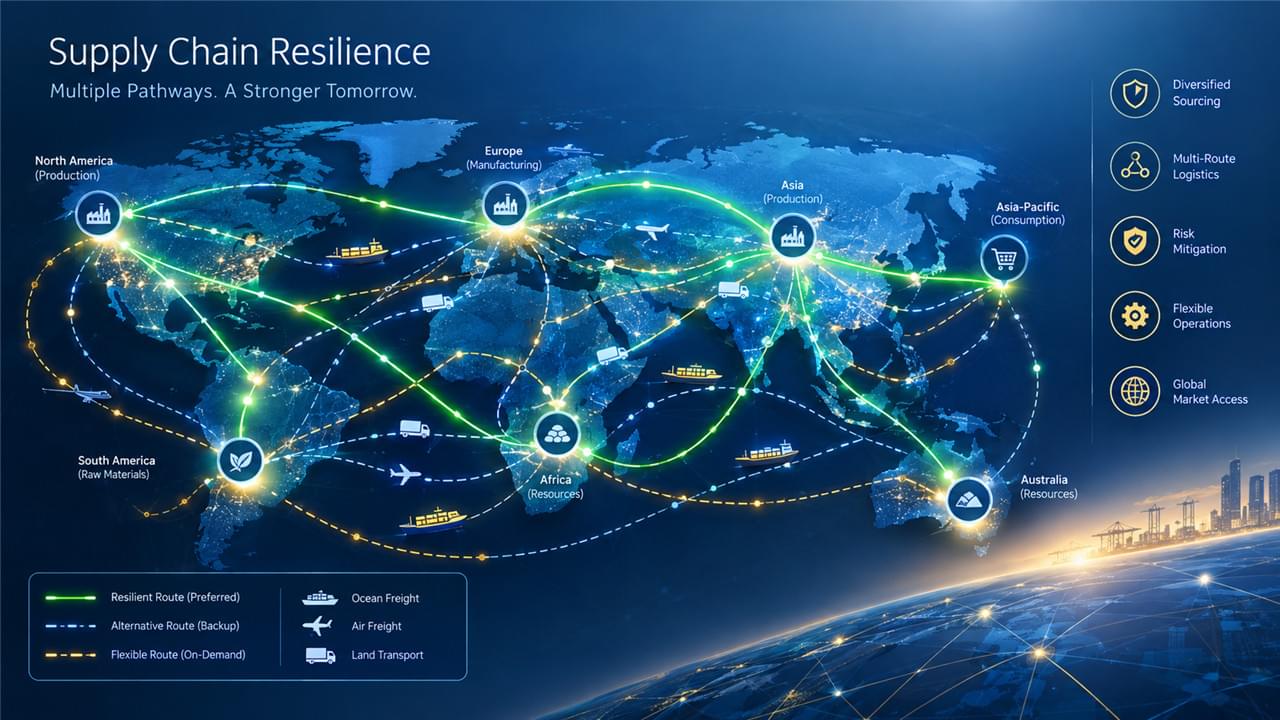
The 2020–2022 supply chain crisis exposed structural vulnerabilities in food ingredient procurement that most buyers had underestimated — and the natural sweetener supply chain turned
The 2020–2022 supply chain crisis exposed structural vulnerabilities in food ingredient procurement that most buyers had underestimated — and the natural sweetener supply chain turned
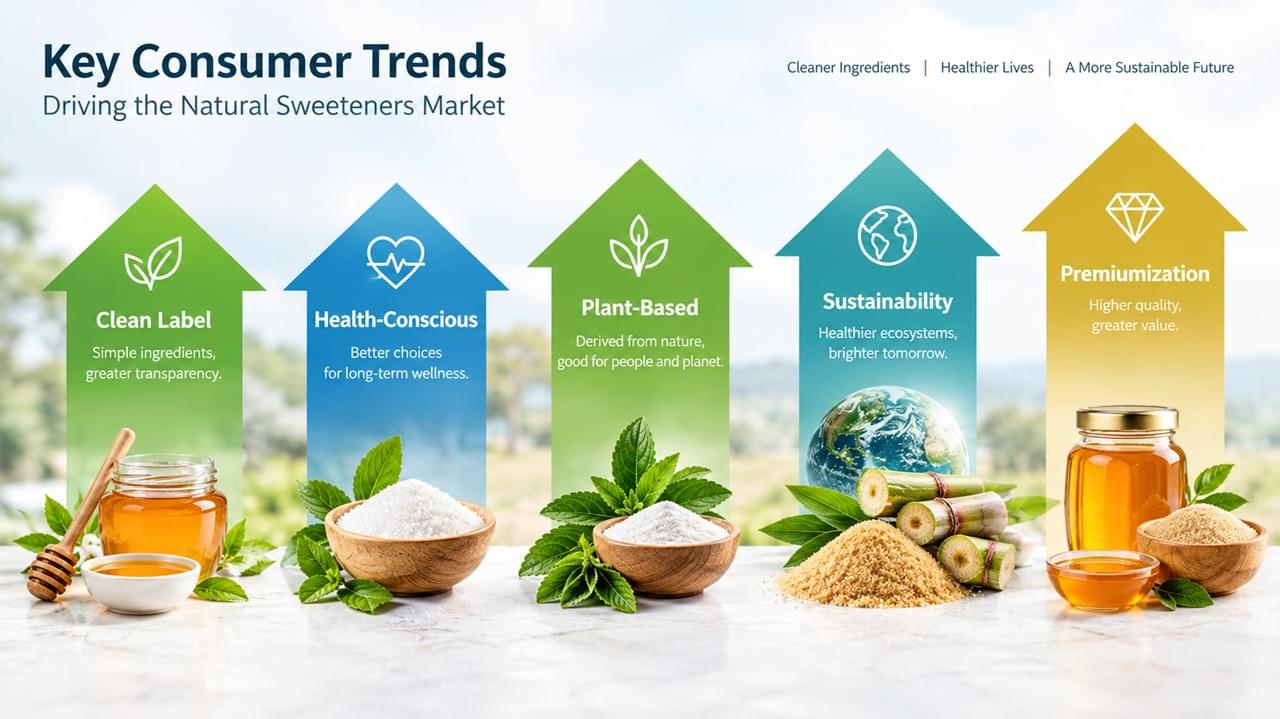
Consumer behavior is the upstream driver of every B2B ingredient decision — manufacturers reformulate when consumers shift, and consumers are shifting systematically away from artificial

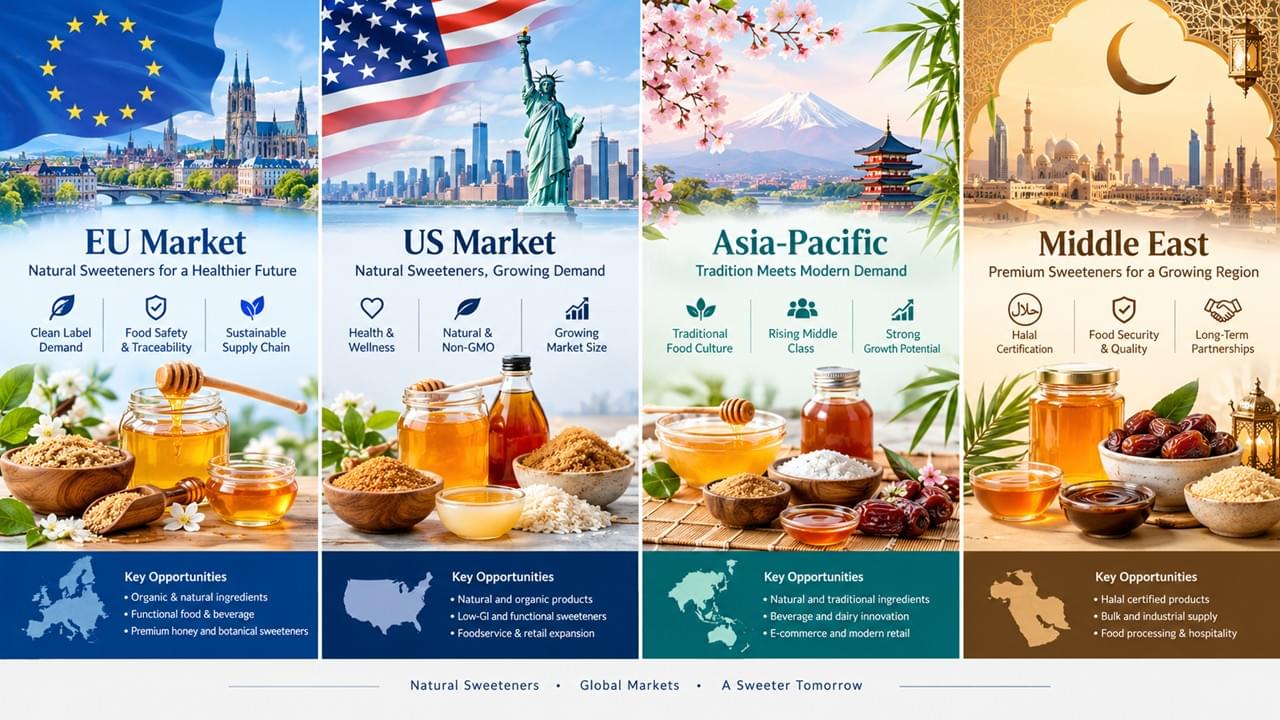
Natural sweetener markets don’t behave uniformly — and treating them as one market is the fastest way to lose money in four places at once.

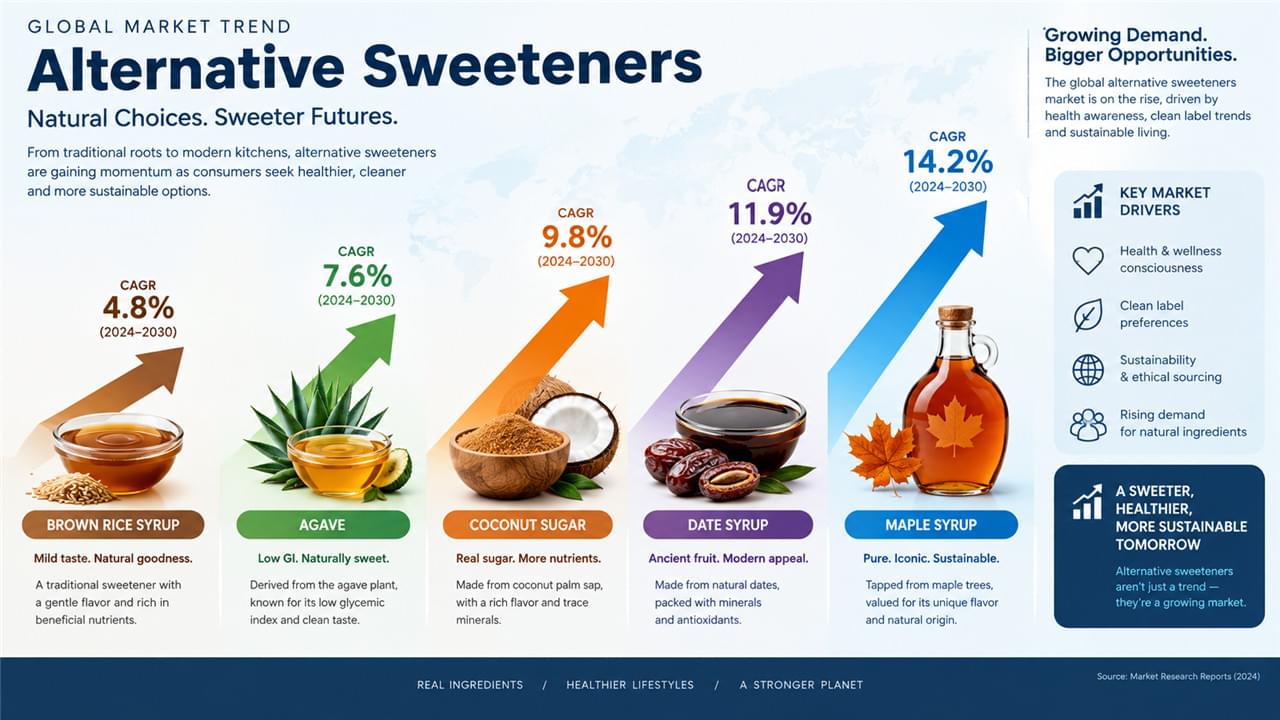
The alternative sweetener market — everything beyond honey and refined sugar — is one of the fastest-growing ingredient categories in food manufacturing, and it’s not

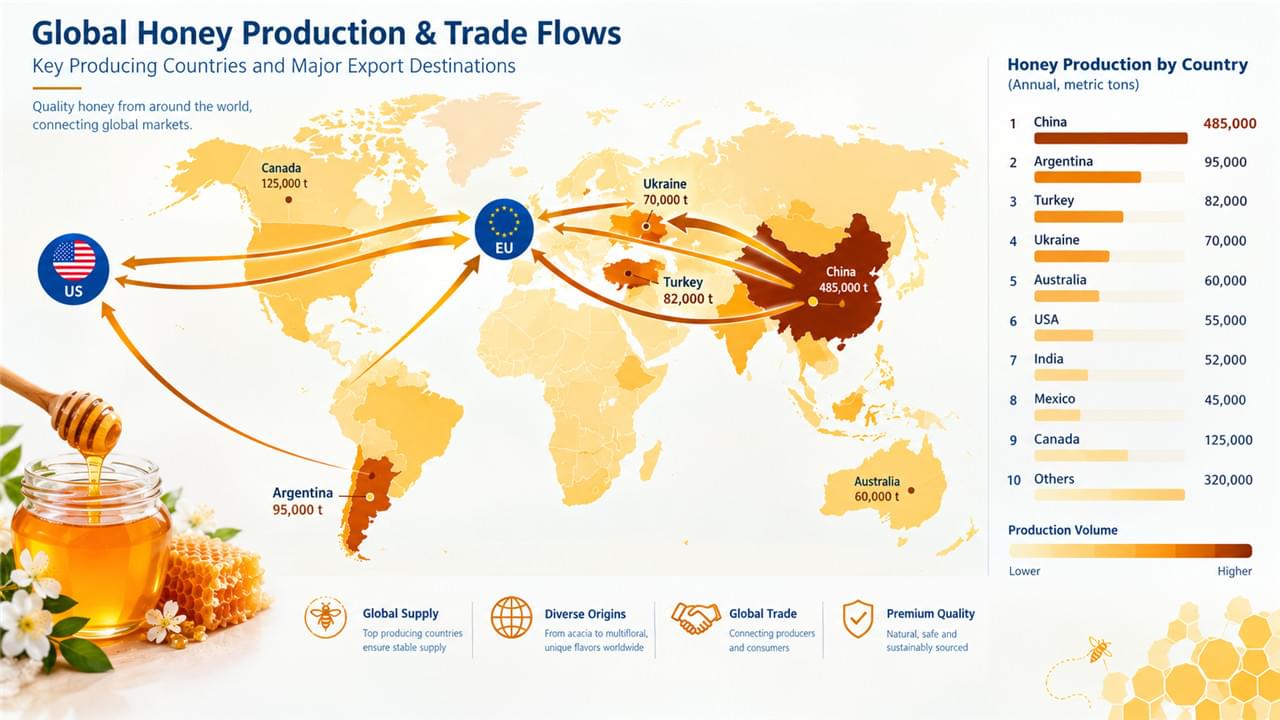
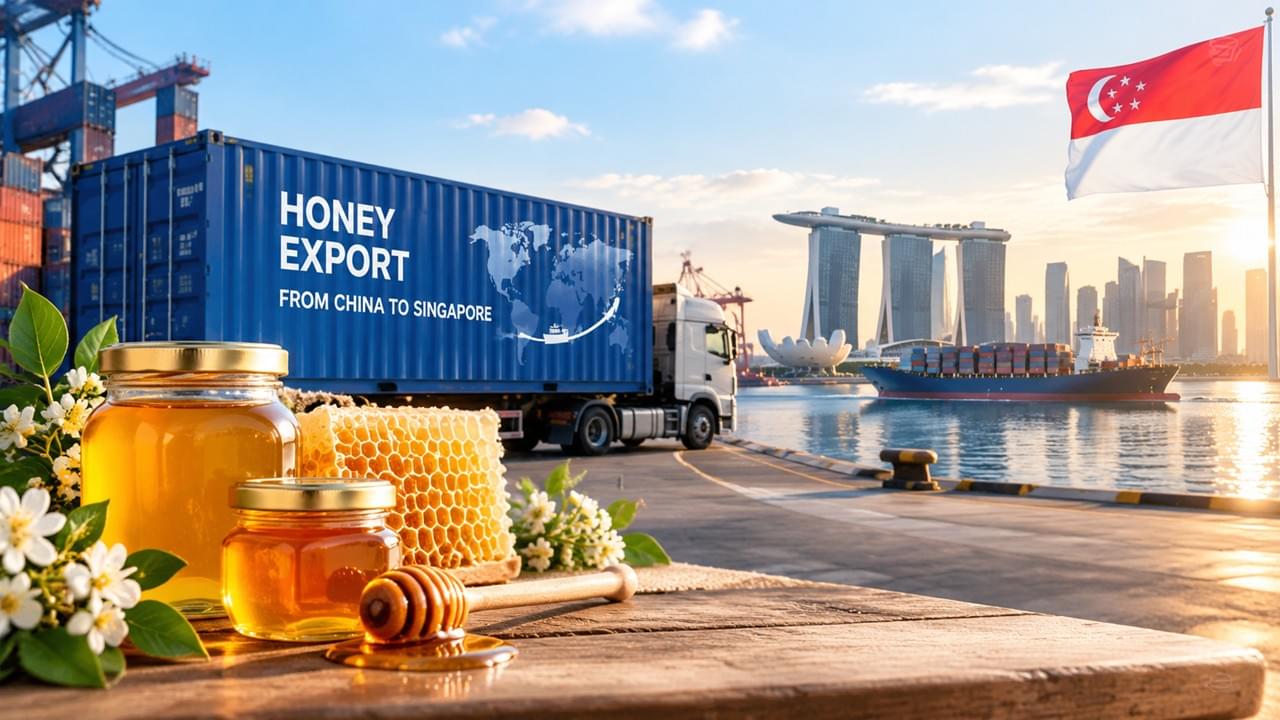
Understanding where honey comes from, how it moves, and what it actually costs is the baseline intelligence for any serious B2B honey buyer — and

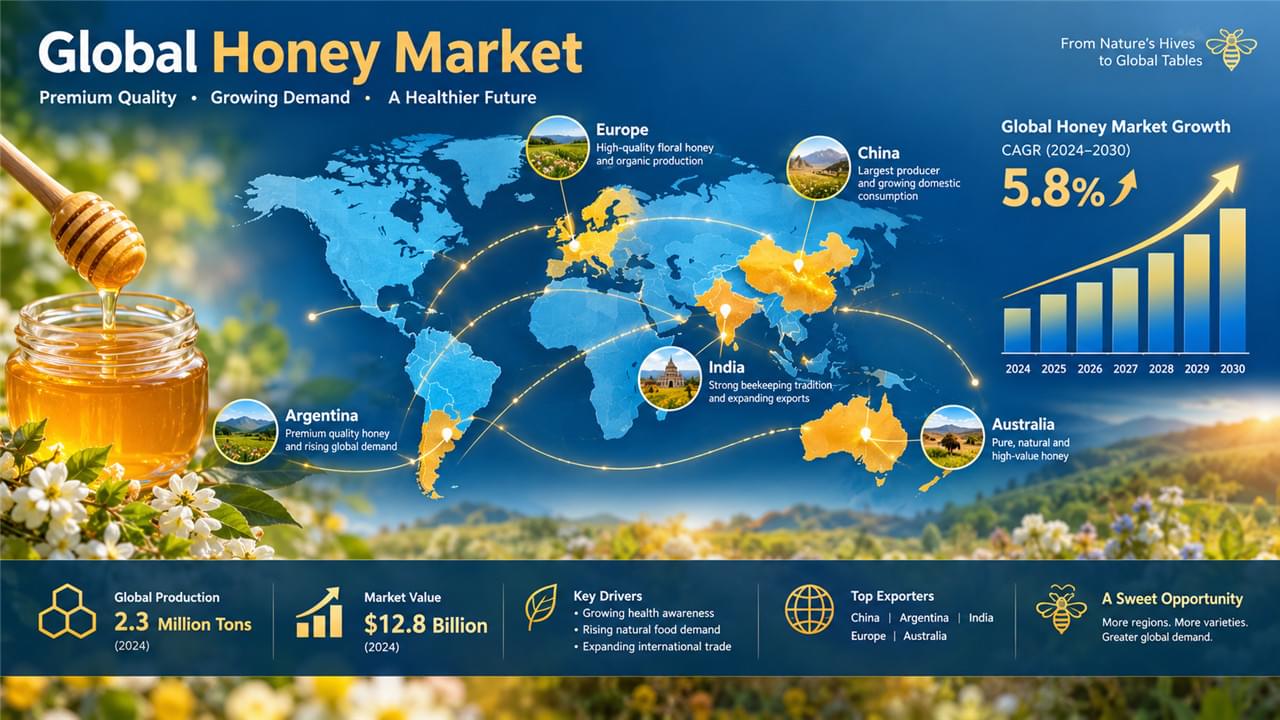
The natural sweetener market is growing faster than the broader food ingredient market — and the gap is widening. Consumer rejection of artificial sweeteners and

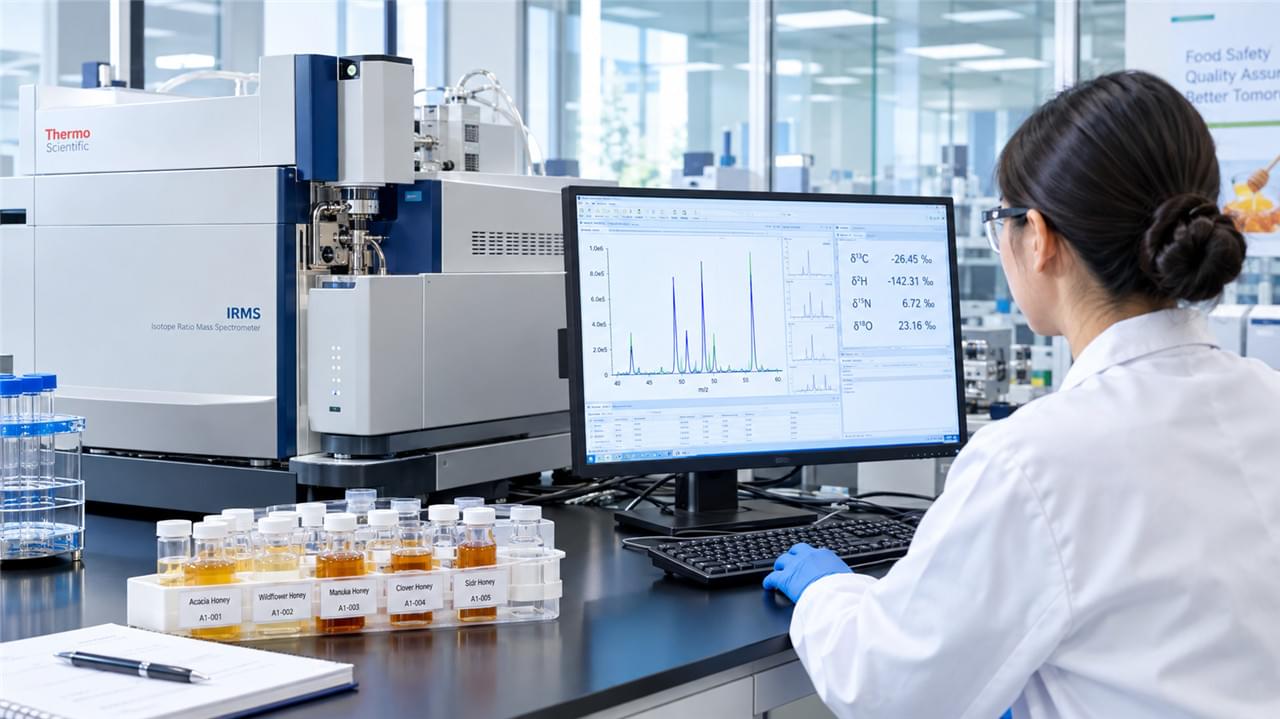
Adulteration in natural sweeteners isn’t a fringe risk — it’s a systematic commercial threat, with billions of dollars of fraudulent product entering global supply chains

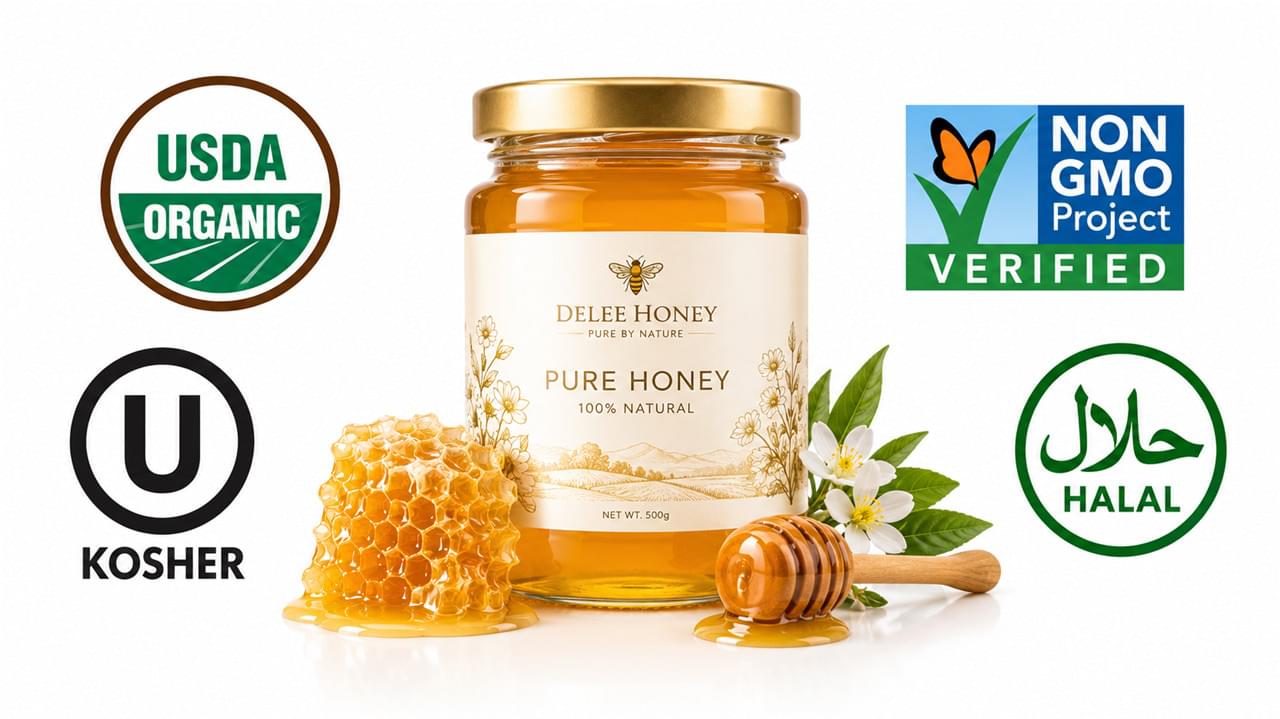
Four labels decide more shelf space in the natural sweetener market than any lab result: organic, non-GMO, Kosher, and HALAL. Each opens a distinct customer

A certificate on the wall tells you a supplier passed an audit. Understanding what that audit actually verified — and what paperwork it generates —

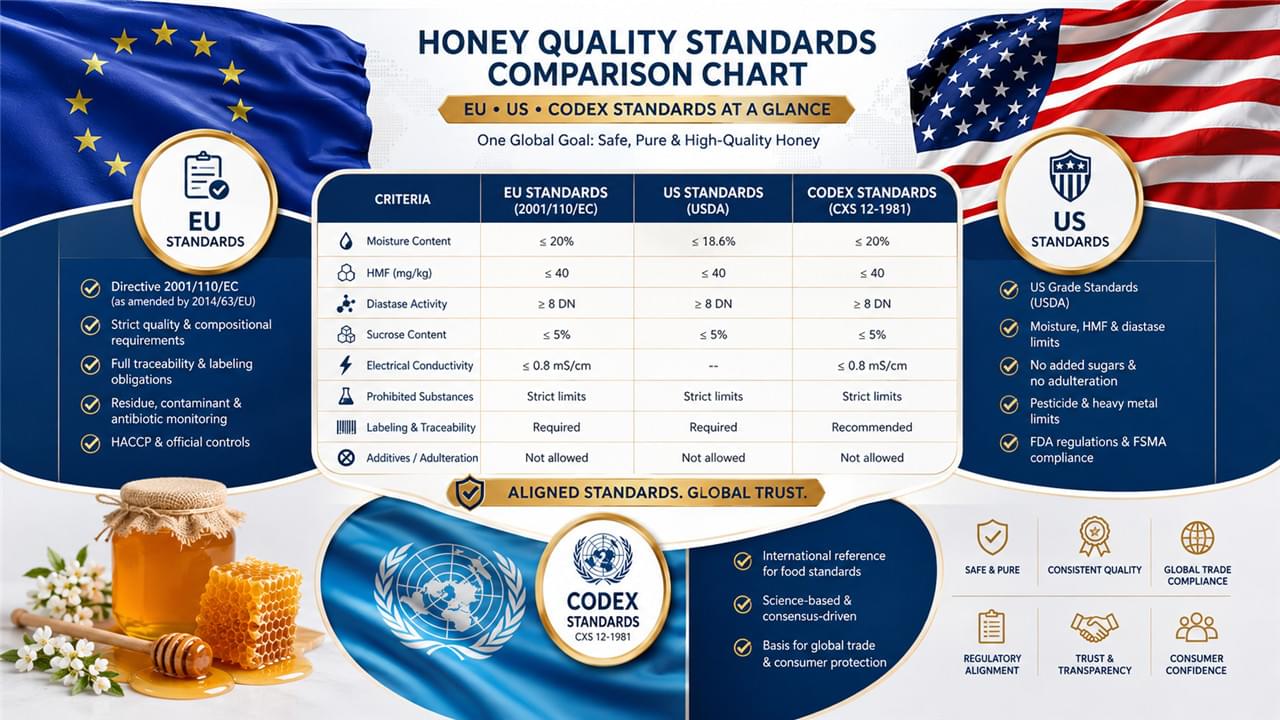
If you’re sourcing honey for multiple export markets, you’re living in three regulatory worlds at once — and they don’t always agree. Codex gives you