
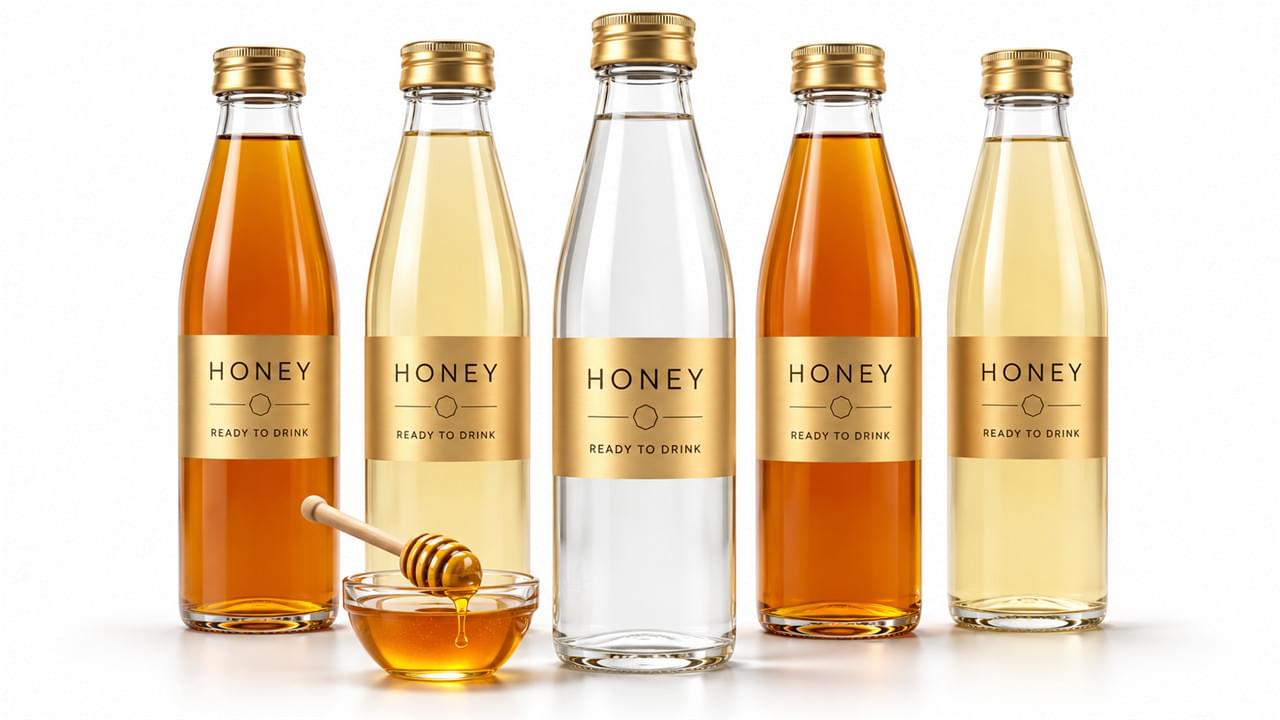
The RTD beverage category is running a clean-label transformation, and shoppers are reading the back of the bottle before the front. High-fructose corn syrup, artificial sweeteners, and synthetic additives are getting rejected at shelf — which makes honey, agave, and maple syrup not just an alternative but an advantage. They carry flavor, function, and a label story all at once.
This guide breaks beverage sweetener formulation into five working rules, covering solubility, pasteurization, flavor matching, fermentation, and shelf life — the numbers you can take straight to a production trial.
⭐ The short version: liquid sweeteners outperform crystalline sugar in cold-process drinks, survive standard pasteurization, and win or lose on flavor fit — not sweetness math.
🧪 Rule 1: The Solubility Numbers Behind Beverage Sweetener Formulation
Liquid natural sweeteners dissolve readily in cold and hot water alike — no heating required, which is exactly why they simplify cold-process manufacturing. These are the working numbers:
| Sweetener | Viscosity (cP at 25°C) | Cold Water Solubility | pH Stability Range |
|---|---|---|---|
| Honey (65°Brix) | 8,000–10,000 | Good (as diluted solution) | 3.5–7.0 |
| Agave Nectar | 1,500–4,000 | Excellent | 3.0–8.0 |
| Maple Syrup | 150–200 | Excellent | 4.0–8.0 |
| Date Syrup | 3,000–6,000 | Good | 4.0–7.5 |
| Rice Syrup (45°Brix) | 500–800 | Good | 4.0–8.0 |
One production note that saves headaches: pre-dilute to 30–45°Brix before line use. Full-concentration syrups are harder to pump, dose, and blend — and dosing errors at full strength are expensive to fix downstream.
🔥 Rule 2: Plan for Heat Before Pasteurization Does It for You
Honey, maple, agave, and rice syrup all survive standard pasteurization (72°C/15 sec HTST or 85°C/30 min batch). In beverage sweetener formulation, the risk isn’t survival — it’s flavor. Honey’s volatile aromatics degrade under prolonged exposure above 70°C. Two options: add honey after heat treatment where the process allows, or use encapsulated honey flavor to protect the heat-labile compounds. Premium honey-flavored drinks that skip this step taste like “sweet” — not like honey — and consumers notice before your QA does.
🍋 Rule 3: Flavor Matching in Beverage Sweetener Formulation
Flavor fit decides whether honey in RTD beverages reads as craft or as a mistake:
| Sweetener | Flavor Profile | Best Beverage Matches | Avoid |
|---|---|---|---|
| Wildflower Honey | Floral, complex | Herbal teas, functional tonics | Citrus RTD (flavor clash) |
| Acacia Honey | Mild, neutral | All beverage types | None significant |
| Agave Nectar | Clean, slight caramel | Sports drinks, lemonade, cocktail mixers | Heavy botanical blends |
| Maple Syrup | Caramel, woody | Coffee drinks, oat milk beverages | Citrus profiles |
| Date Syrup | Rich, fruity | Energy drinks, smoothies | Light floral profiles |
Lemonades and Fruit Drinks
Both honey and agave shine in acidic fruit matrices (pH 3.0–4.0) and hold stable across ambient and refrigerated shelf life. Agave-lemonade: 6–10% w/w targets 9–11°Brix, and agave’s clean profile lets the lemon dominate — no turbidity concerns either. For a full technical profile, see our agave nectar properties guide. Honey-lemonade: use light acacia honey, pre-filter through 25-micron for clear formats, and accept that honey proteins may add a slight haze — fine in cloudy lemonade, wrong in bright packs.
Sports and Adaptogen Drinks
Honey’s glucose:fructose ratio (~1:1.2) matches the multi-transport carbohydrate profile endurance research supports — a scientifically credible claim, not just a marketing one. Run 6–9% honey in isotonic formulas (280–320 mOsm/kg) with 0.5–0.8 g/L sodium chloride. In adaptogen drinks, functional beverage sweetener formulation gets easier: date syrup and honey do double duty as sweetener and ingredient, and their mineral content reinforces the positioning. More in our date syrup functional beverage guide.
☕ Rule 4: Hot Beverage Sweetener Formulation Plays by Different Rules
Tea and Coffee
Bottled honey tea: add honey at 45–50°C to preserve aromatics, run 3–6% for medium-sweet, and watch clarity — tannin-protein-honey interactions can haze the pack at ≥4%. RTD coffee is trickier: honey caramelizes at brewing temperatures (85–95°C). That’s a feature for caramelized profiles and a defect elsewhere — use raw honey post-blend when you want fresh honey character. Acacia and linden honeys disrupt coffee flavor least.
Plant-Based Milks
Maple syrup and coconut sugar solution are the natural fits for oat, almond, and plant-based lattes — caramel notes complement cereal and nut bases without fighting them. Guideline: 2–4% maple syrup hits consumer-preferred sweetness without burying the oat character.
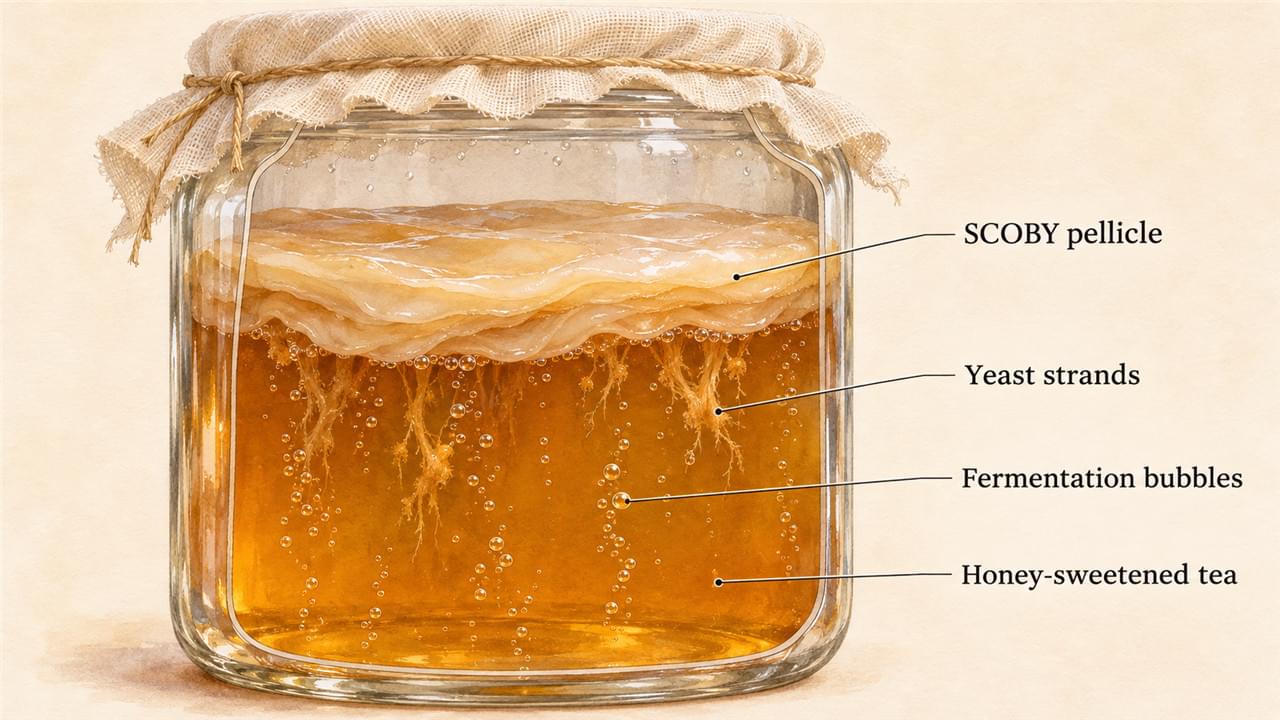
🫖 Rule 5: Fermented Beverage Sweetener Formulation
Kombucha Honey Fermentation
Kombucha SCOBY cultures metabolize honey comparably to sucrose, but honey’s antimicrobial compounds make concentration the critical variable in kombucha honey fermentation:
- Start at 8–12% honey w/v (80–120 g/L) for primary fermentation
- Above 12%, inhibition risk rises — blend with cane sugar if you need more starting sugar
- Post-fermentation honey addition is the premium play: “honey finish” kombucha is a genuine market differentiator
- Unpasteurized honey carries wild yeasts that introduce flavor variability — use pasteurized honey for commercial consistency
Jun Tea
Jun — “the champagne of kombucha” — ferments on honey alone with a specialized SCOBY adapted to honey’s antimicrobial environment. For premium positioning, it offers authentic historical provenance that’s hard to copy.
📦 Shelf Life: Microbiology Isn’t Optional
Every clean label beverage sweetener still answers to thermal process validation — microbiology doesn’t care about your marketing:
- Low-pH drinks (pH <4.0): standard pasteurization provides control; honey and agave add no extra risk
- Neutral pH (6.0–7.5): the higher-risk category — verify F-value calculations and packaging before launch
- Honey at >3% may contribute mild antimicrobial benefit, but it never replaces proper thermal processing
🧭 Beverage Sweetener Formulation: The Drinks-That-Sell Summary
Five rules, one habit: pick the sweetener for the matrix, the process, and the label — in that order. For the full cross-category picture, see our complete natural sweetener formulation guide. For deeper science, the Journal of the Institute of Brewing and International Beverage Technology are the references beverage teams actually cite.
 English
 Arabic
 French
 German
 Portuguese
 Russian
 Spanish
 Japanese
 Korean