
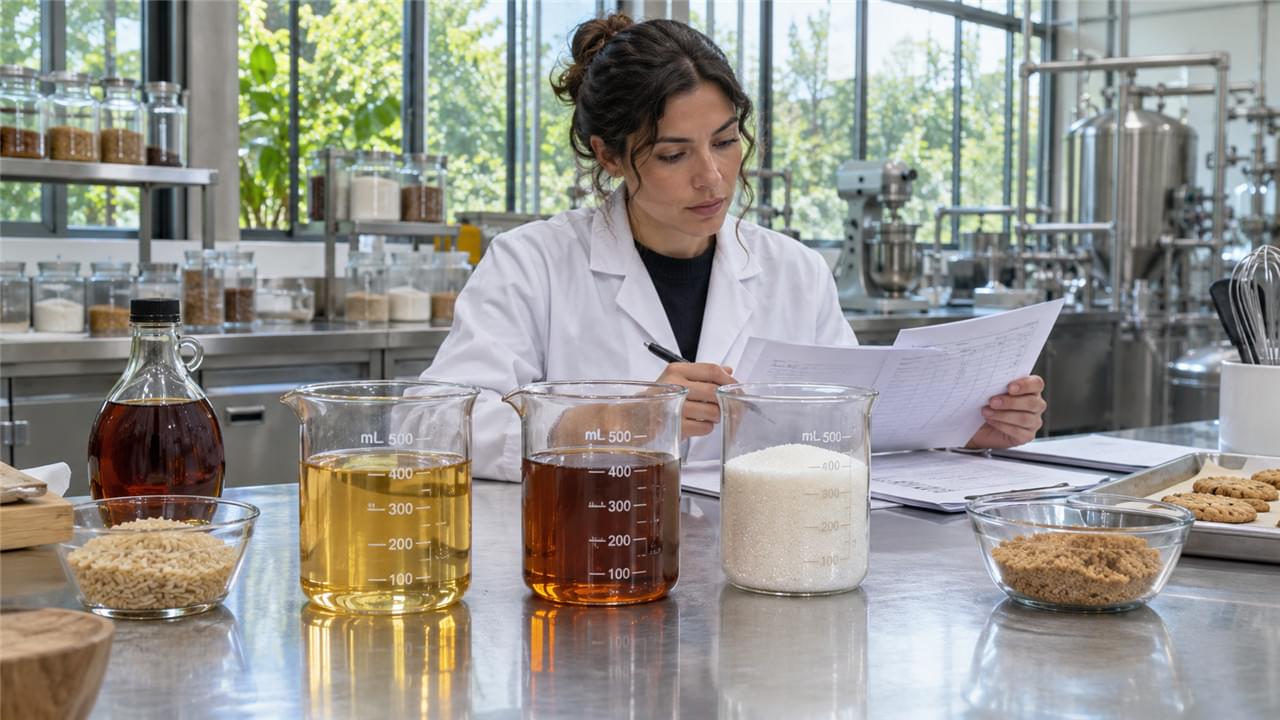
Natural sweeteners — honey, maple syrup, agave, coconut sugar, molasses — have crossed over from niche to default. Three forces converged to put them there: clean label demand, functional nutrition, and the simple fact that consumers now expect flavor complexity, not just sweetness. That’s where technique separates the launches that scale from the ones that stall. Natural sweetener formulation punishes anyone who treats it as a simple swap — so this guide walks through the science and the shop-floor practice across bakery, beverages, dairy, savory, and functional foods, with the adjustment numbers you can take straight to a bench trial.
⭐ The short version: it fails most often on three things — water balance, browning, and sweetness assumptions. Get those three right and everything else is refinement.
🧪 Why Natural Sweetener Formulation Plays by Different Rules
Sucrose is predictable. It behaves the same way in every application, which is exactly why formulators trusted it for a century. Natural sweeteners bring variables — water, fructose, flavor, acidity — and each one changes the formula. Managing them is the entire discipline.
💧 Moisture and Water Activity
Honey and liquid syrups carry 15–30% water by weight. Swap them for dry sugar and that water lands in your formula whether you planned for it or not. Replacing 100 g of sucrose with 130–140 g of honey introduces roughly 18–25 g of extra free water — enough to change dough rheology, crumb texture, and how moisture migrates over shelf life.
The fix: cut other liquids (water, milk, oil) by 15–20% when moving from sucrose to honey or liquid syrups.
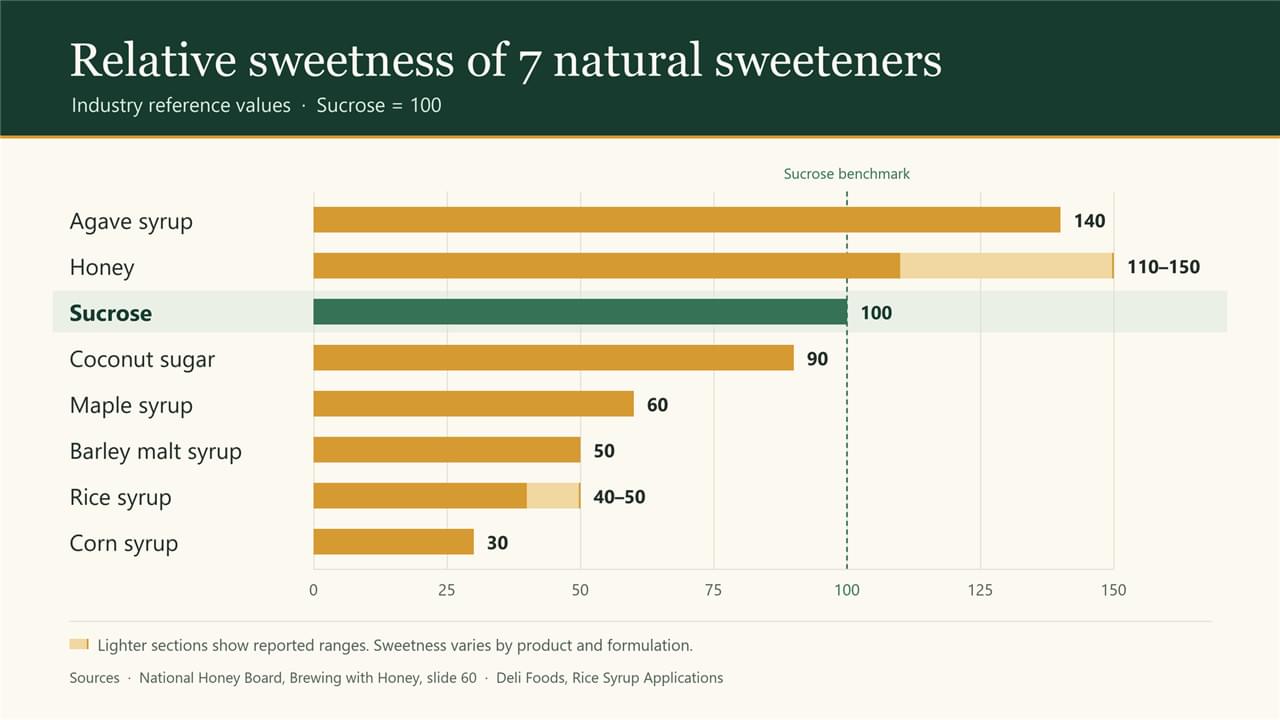
📊 Relative Sweetness of Natural Sweeteners
Initial ratios come from sweetness coefficients — but treat them as a starting point, not a verdict. Flavor interactions mean bench trials always get the final word:
| Sweetener | Relative Sweetness (Sucrose = 1.0) | Notes |
|---|---|---|
| Honey | 1.0–1.3 | Varies by floral source; fructose-forward |
| Agave Nectar | 1.3–1.5 | High fructose; very sweet |
| Maple Syrup | 0.6–0.9 | Grade-dependent; subtle caramel notes |
| Coconut Sugar | 0.7–0.85 | Low-GI; light caramel flavor |
| Molasses | 0.5–0.7 | Strong flavor; used for complexity |
| Brown Rice Syrup | 0.3–0.5 | Mild; usually blended |
| Date Syrup | 0.8–1.0 | Rich, fruity; high iron |
For composition data behind these numbers, the USDA honey composition database is the reference most formulators cite.
🔥 Maillard Reaction and Browning
Fructose and glucose brown faster than sucrose — it’s simple chemistry, and it shows up in your oven. Baked goods made with honey or high-fructose syrups color earlier and darker at standard temperatures.
The fix: drop oven temperature by 10–15°C (18–25°F) and extend baking time 10–15%. Watch color, not the clock.
💦 Hygroscopicity and Shelf Life
Fructose-rich sweeteners pull moisture from the air and hold it in the product matrix. That’s a feature in soft-baked goods — it extends the soft-eating window. It’s a defect in crisp formats, confectionery, and powders, where it means stickiness, caking, and accelerated staling. Same chemistry, opposite outcomes — in natural sweetener formulation, your category decides which one you’re managing.
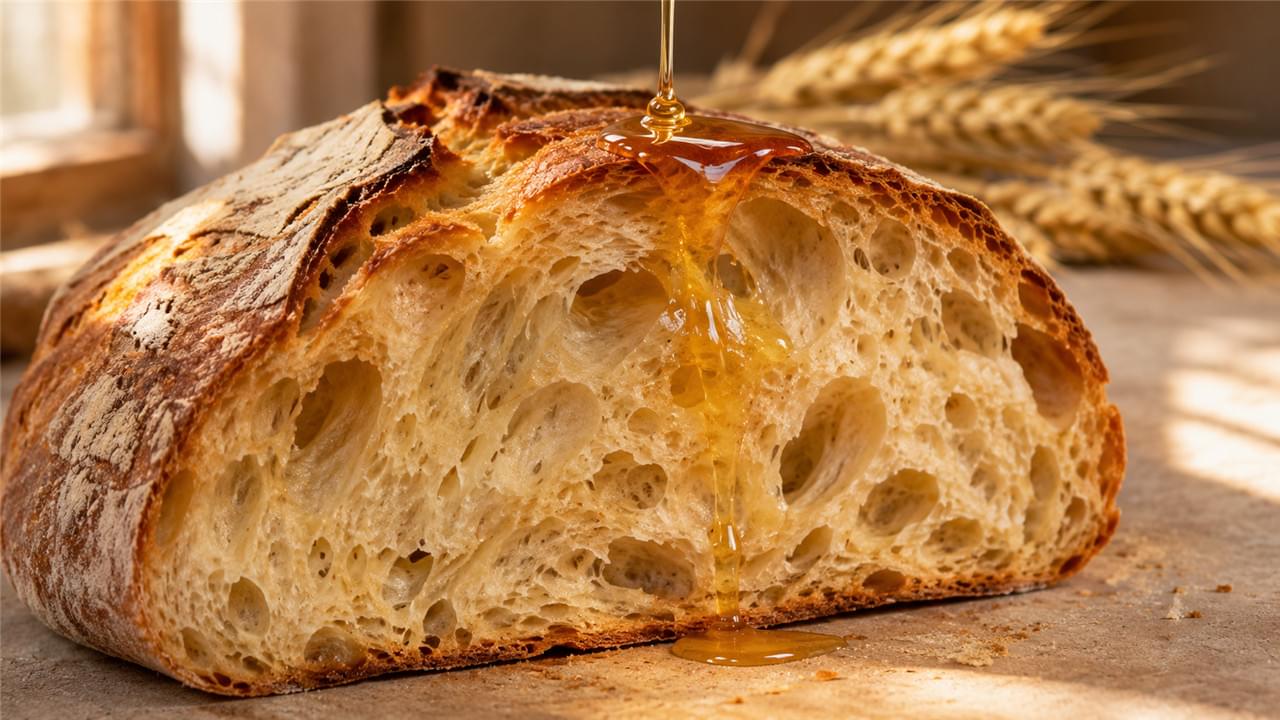
🍞 Bakery: Natural Sweetener Formulation Under Heat
🥖 Yeasted Doughs: Honey Substitution Ratio Baking Rules
Honey does double duty in yeasted products — fermentation substrate and flavor contributor. Yeast consumes honey’s glucose readily; the fructose lingers as residual sweetness and crust browning. The working honey substitution ratio baking protocol:
- Replace sucrose at 1:1.25 by weight (honey to sugar)
- Reduce water by 20 mL per 100 g honey added
- Watch yeast activity — honey’s trace antimicrobials (hydrogen peroxide, defensin-1) can slow fermentation at high doses
Target level: 2–5% of flour weight. Enough for flavor, not enough to stall the ferment. For a deeper dive on choosing the right floral source, see our honey varieties and compositions guide.
🍪 Cookies, Biscuits, and Crackers
Hygroscopicity is the whole story here, and it’s where bakery natural sweetener formulation rewards discipline. It delivers the chew in soft-style cookies and ruins the snap in crisp ones — so match the sweetener to the texture target. Agave nectar earns its place in gluten-free cookie work, where moisture retention fights the crumbling that plagues GF bakes. Coconut sugar swaps for brown sugar at 1:1 in most cookie formulas, bringing mild caramel notes at slightly lower sweetness.
🍫 Confectionery and Chocolate
Three controls matter in confectionery natural sweetener formulation: honey’s invert sugar fraction inhibits sucrose recrystallization, which makes it a natural humectant in fondants and ganaches; molasses and date syrup raise viscosity sharply, so adjust emulsifier levels to match; and strong-flavored sweeteners — molasses, buckwheat honey — will flatten delicate flavor systems. Use mild varieties unless the boldness is the point.
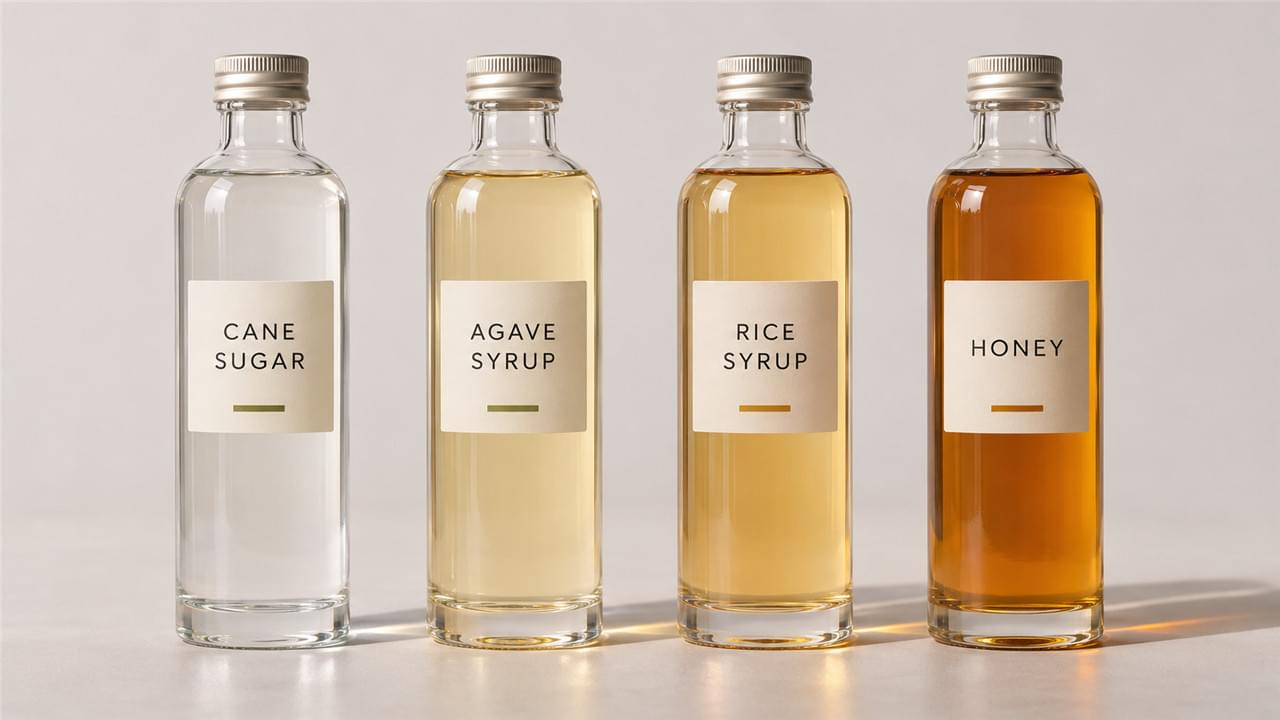
🥤 Beverage Natural Sweetener Formulation
🧊 Cold Brew and RTD Drinks
Liquid sweeteners dissolve readily in cold water — technically superior to crystalline sugar in any cold-process beverage. Honey syrups standardized at 65–70°Brix give you dosing consistency across batches. Three considerations: high-concentration honey can add slight turbidity, so use filtered grades for clear beverages; agave’s neutral profile makes it the default where sweetener flavor interference is unwanted; and most natural sweeteners hold stable across pH 3.5–8.0, covering the full beverage range.
☕ Hot Beverages and Tea
Honey’s volatile aromatics start breaking down above 40°C. For premium tea and coffee where honey flavor is the selling point, add it after brewing. For industrial applications built around flavor consistency, dose at processing temperature and accept that heat-labile aromatics are gone. Neither approach is wrong — they’re selling different things.
🫖 Kombucha and Fermented Beverages
Honey is the classic choice for mead and premium kombucha, but its antimicrobial properties cut both ways: the SCOBY metabolizes it like sucrose, while concentrations that are too high inhibit the fermentation you’re paying for. Start at 8–12% w/v and adjust from observation, not assumption — the first lesson fermented-beverage natural sweetener formulation teaches everyone. For market context on where these formats are heading, see our natural sweetener beverage applications guide.
🥛 Dairy: Natural Sweetener Formulation by Timing and Temperature
In dairy, natural sweetener formulation succeeds or fails on when and at what temperature the sweetener meets the culture.
🥣 Yogurt and Cultured Products
Timing decides everything with honey in yogurt. Pre-fermentation at ≤3% leaves lactic acid bacteria unbothered; push past 5% and honey’s antimicrobial activity starts thinning your culture. Post-fermentation addition is the premium play — swirled, layered, or mixed at packaging, it protects both the flavor and the cultures. Agave at 3–6% sweetens with minimal flavor interference, ideal for fruit-forward lines.
🍨 Ice Cream and Sorbet
Honey’s fructose delivers cryoscopic depression — a lower freezing point, a softer scoop, a smoother eating experience. That’s especially valuable in reduced-fat formulas, where cutting fat normally hardens the pack. Replace 25–50% of sucrose with honey: enough for scoopability, not enough to go soupy.
🧀 Cheese and Fresh Dairy
Date syrup and honey work in cheese accompaniments, spreads, and ricotta-style fresh cheeses, and their natural antimicrobial properties can quietly extend shelf life at sufficient concentrations.
🍯 Sauces, Dressings, and Savory Applications
🔥 Marinades and Glazes
Honey’s Maillard reactivity is why it owns the glaze category — savory natural sweetener formulation lives and dies on browning control. Industrial honey glazes run 15–25% concentration, caramelized under controlled heat. Three parameters keep them consistent: apply in the final 10–15 minutes of cooking, use heat-stable processed grades (raw honey’s enzyme activity causes problems), and remember molasses in BBQ sauce is there for color, bitterness, and depth — not sweetness.
🥗 Dressings and Condiments
Here’s an underused trick: honey stabilizes oil-water emulsions. Its enzyme and peptide proteins act as natural emulsifiers, letting clean label sweetener applications do double duty in vinaigrettes and dressings at 5–15% use levels — one ingredient, two jobs, shorter label.
💪 Functional Foods: Natural Sweetener Formulation With Stakes
🏃 Sports Nutrition
Honey delivers glucose and fructose in one ingredient — the same dual-carbohydrate architecture that performance blends are built on. Research supports improved endurance when fructose co-ingests with glucose around a 1:2 ratio, a profile polyfloral honey naturally approximates. Energy gels, electrolyte drinks, recovery bars, chews: the formats are already on shelf.
💊 Nutraceuticals and Supplements
Natural sweeteners pull formulation weight in supplement formats: honey as matrix binder and delivery system in propolis lozenges, as preservation medium (≥60°Brix) and immune synergist in elderberry syrups, and date syrup or honey as the base for traditional adaptogen concentrates.
⚠️ Infant Foods: The Non-Negotiable
Honey must never appear in products for infants under 12 months. Clostridium botulinum spores survive processing, and the prohibition is absolute across EU, FDA, and Codex frameworks. Commercial sterilization (121°C/15 min) may theoretically destroy spores — the regulation doesn’t care. For pediatric formulas over 12 months, honey is fine at appropriate levels with transparent labeling. This is the one rule in natural sweetener formulation with no exceptions and no negotiating. The Codex honey standard is the reference text.
🏷️ Regulatory Notes for Natural Sweetener Formulation
✅ Clean Label Sweetener Applications
Clean label designation holds when three conditions are met: minimally processed form, no synthetic additives undermining the “natural” claim, and declaration by common name on the ingredient list. In the EU, “honey,” “maple syrup,” and “agave syrup” stand as ingredient names; a “natural sweetener blend” must disclose its components. The Institute of Food Technologists resources are useful for keeping up with how these claims are being policed.
🌱 Organic and Non-GMO Certification
If the finished product carries organic certification, every sweetener ingredient must come from certified organic sources — verify your supplier’s certification chain and pull valid certificates at each annual renewal, not just the first order. For the full picture, see our guide on organic, non-GMO, Kosher and HALAL certifications; for maple and agave specifics, our maple syrup production guide and agave nectar properties guide cover the technical details.
Related reading: Natural Syrups and Alternative Sweeteners Guide · Quality Standards and Certifications
 English
 Arabic
 French
 German
 Portuguese
 Russian
 Spanish
 Japanese
 Korean