
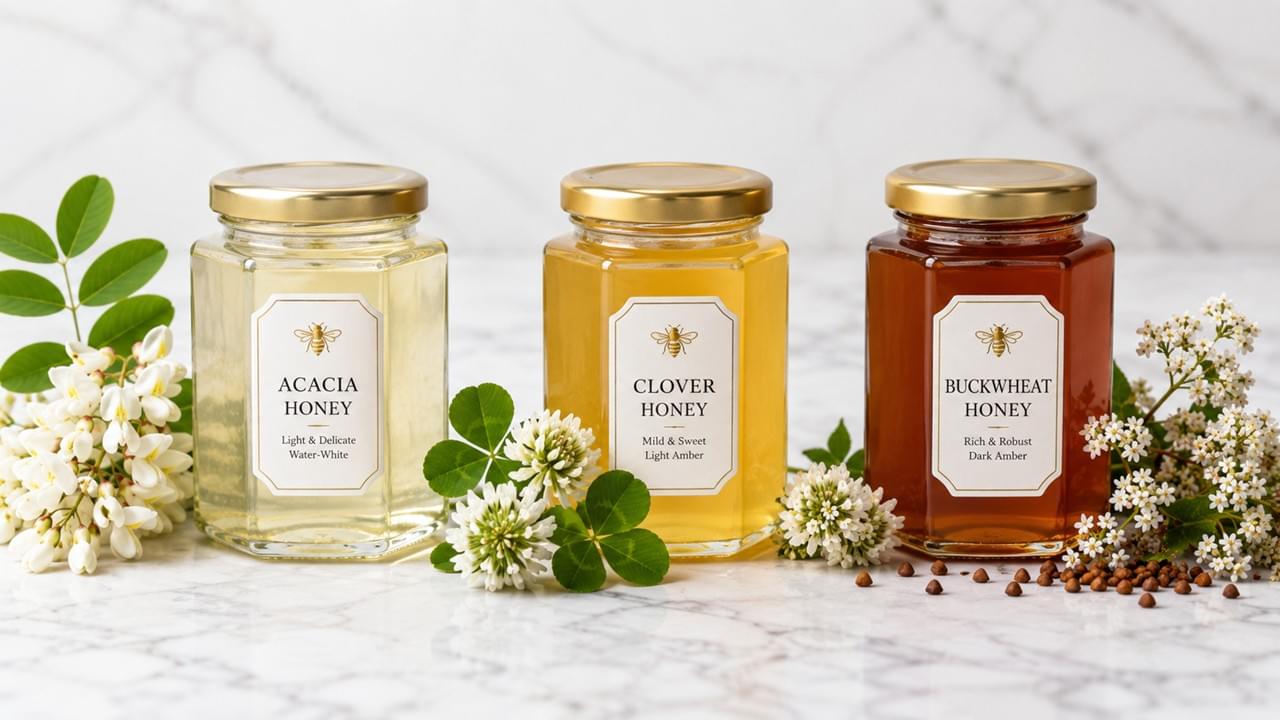
Choosing the right honey type can significantly influence product quality, flavor consistency, and market positioning. In today’s food industry, understanding monofloral vs polyfloral honey is no longer just technical knowledge — it is an important business decision for manufacturers, wholesalers, and private-label brands.
Different honey varieties offer unique sensory characteristics, nutritional profiles, and formulation advantages. Whether your company produces beverages, bakery products, functional foods, or premium retail honey, selecting the proper honey type helps improve both product performance and consumer appeal.
🌼 What Is Monofloral Honey?
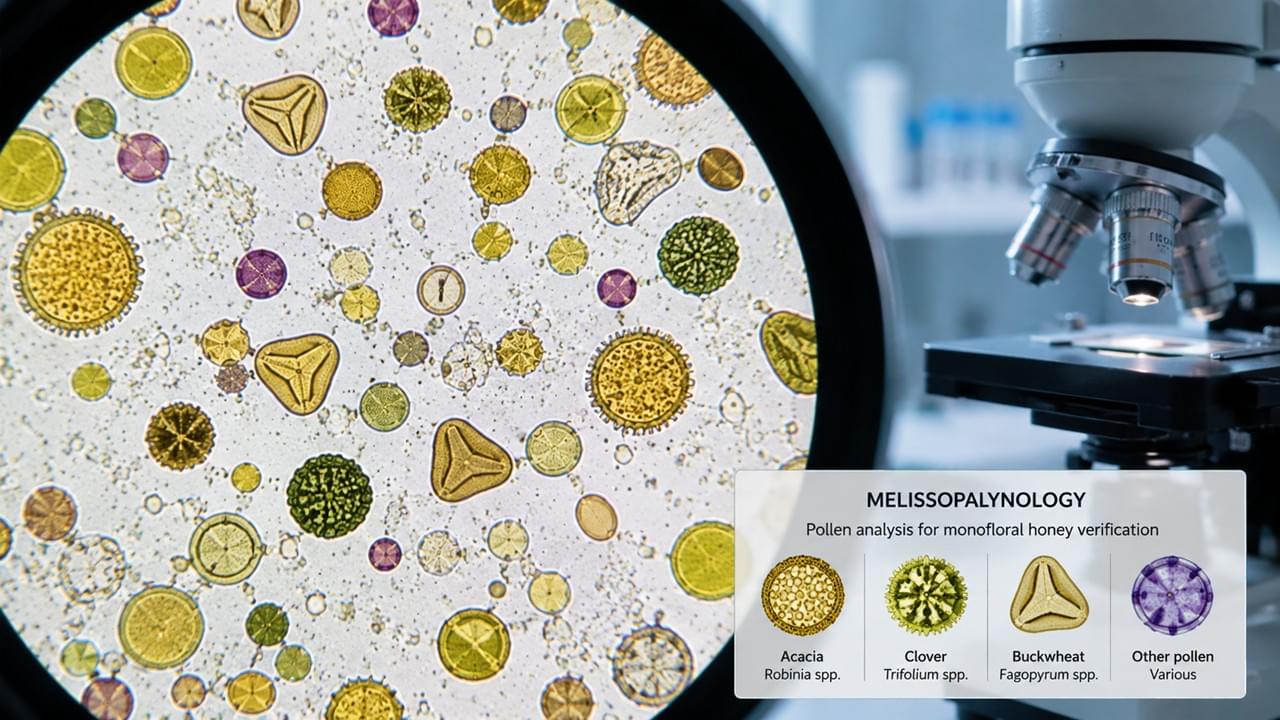
Monofloral honey comes primarily from one dominant floral source during a specific blooming period. Although bees naturally visit multiple plants, the declared flower source must dominate the pollen profile enough to create identifiable flavor and composition characteristics.
Laboratories commonly use pollen analysis to verify floral origin and support authenticity claims. This process is especially important for export markets and premium retail positioning.
🍯 Why Monofloral Honey Matters
For B2B buyers, monofloral honey provides several commercial advantages:
- ✅ Better flavor consistency
- ✅ Premium product positioning
- ✅ Easier formulation standardization
- ✅ Stronger marketing differentiation
- ✅ Functional nutritional value
These benefits make monofloral honey applications particularly attractive for brands seeking stable quality across multiple production batches.
🌿 Popular Monofloral Honey Varieties
🍃 Acacia Honey
Acacia honey is famous for its light color, mild sweetness, and slow crystallization. Because it remains liquid for extended periods, it is widely used in beverages, sauces, and premium retail packaging.
Common applications include:
- Beverage sweetening
- Yogurt and dairy products
- Table honey
- Clean-label food formulations
For companies exploring global sourcing options, our Global Honey Sourcing Guide offers additional insights into origin selection and supply stability.
🌾 Clover Honey
Clover honey is one of the most commonly used commercial varieties in North America. Its mild taste and balanced sweetness make it suitable for bakery products, breakfast foods, and industrial sweetening.
It also offers relatively stable processing performance, making it practical for large-scale food manufacturing.
🌑 Buckwheat Honey
Buckwheat honey is darker, stronger, and richer in antioxidants than many lighter varieties. Growing interest in buckwheat honey antioxidant benefits has increased demand in functional foods and wellness products.
This variety is commonly used in:
- Functional beverages
- Sports nutrition
- Nutraceutical products
- Immune-support formulations
Its bold flavor and high phenolic content support premium health-focused marketing.
🌼 What Is Polyfloral Honey?
Polyfloral honey, also known as wildflower honey, is produced from multiple nectar sources collected throughout the season. Unlike monofloral varieties, no single pollen source dominates the composition.
Polyfloral honey typically offers:
- 🌻 More complex flavor
- 🌻 Greater seasonal variation
- 🌻 Lower sourcing costs
- 🌻 Flexible industrial use
Because of its affordability and versatility, polyfloral honey is widely used in commercial food processing.
🍯 Monofloral vs Polyfloral Honey in Product Applications
Understanding monofloral vs polyfloral honey helps manufacturers select the best option for specific formulations.
✅ Choose Monofloral Honey When:
- Flavor consistency is essential
- Premium positioning matters
- The label highlights floral origin
- Functional properties are important
- Crystallization control is required
For example, acacia honey works well in beverages because of its clarity and slow crystallization behavior.
✅ Choose Polyfloral Honey When:
- Honey is mainly a background sweetener
- Cost efficiency is a priority
- Seasonal variation is acceptable
- Complex flavor is desirable
Polyfloral honey performs especially well in:
- Granola bars
- Sauces and dressings
- Bakery products
- Industrial food formulations
Brands developing food applications can also explore our Honey Applications in Food and Beverage guide for additional formulation ideas.
🔬 Antioxidant Differences Between Honey Types
One important distinction in monofloral vs polyfloral honey is antioxidant concentration. In general, darker honeys contain higher levels of phenolic compounds and bioactive nutrients.
| Honey Type | Antioxidant Level | Typical Positioning |
| Buckwheat Honey | Very High | Functional nutrition |
| Manuka Honey | High | Wellness products |
| Dark Wildflower Honey | Medium-High | Health-focused foods |
| Clover Honey | Moderate | Mainstream products |
| Acacia Honey | Lower | Mild flavor applications |
For companies making health-oriented claims, darker honey varieties often provide stronger nutritional storytelling opportunities.
International buyers can also reference the Codex Alimentarius honey standard for recognized global honey standards.
🌍 Honey Varietal Sourcing Guide for B2B Buyers
An effective honey varietal sourcing guide should include:
- 📌 Pollen analysis verification
- 📌 Traceable apiary origins
- 📌 Moisture specifications
- 📌 Antibiotic testing
- 📌 Authenticity validation
- 📌 Crystallization expectations
Reliable sourcing is critical because weather conditions, flowering cycles, and regional flora can all affect honey consistency.
To better understand international quality benchmarks, visit our Honey Quality Standards and Testing article.
🤝 Final Thoughts
The choice between monofloral and polyfloral honey ultimately depends on your product goals, budget, and target market.
If your brand focuses on premium positioning, flavor consistency, or functional nutrition, monofloral honey may offer stronger commercial advantages. If flexibility and cost control are more important, polyfloral honey remains an efficient and versatile solution.
Understanding the practical differences in monofloral vs polyfloral honey helps B2B buyers make smarter sourcing decisions while improving product competitiveness in global markets.



 English
 Arabic
 French
 German
 Portuguese
 Russian
 Spanish
 Japanese
 Korean