
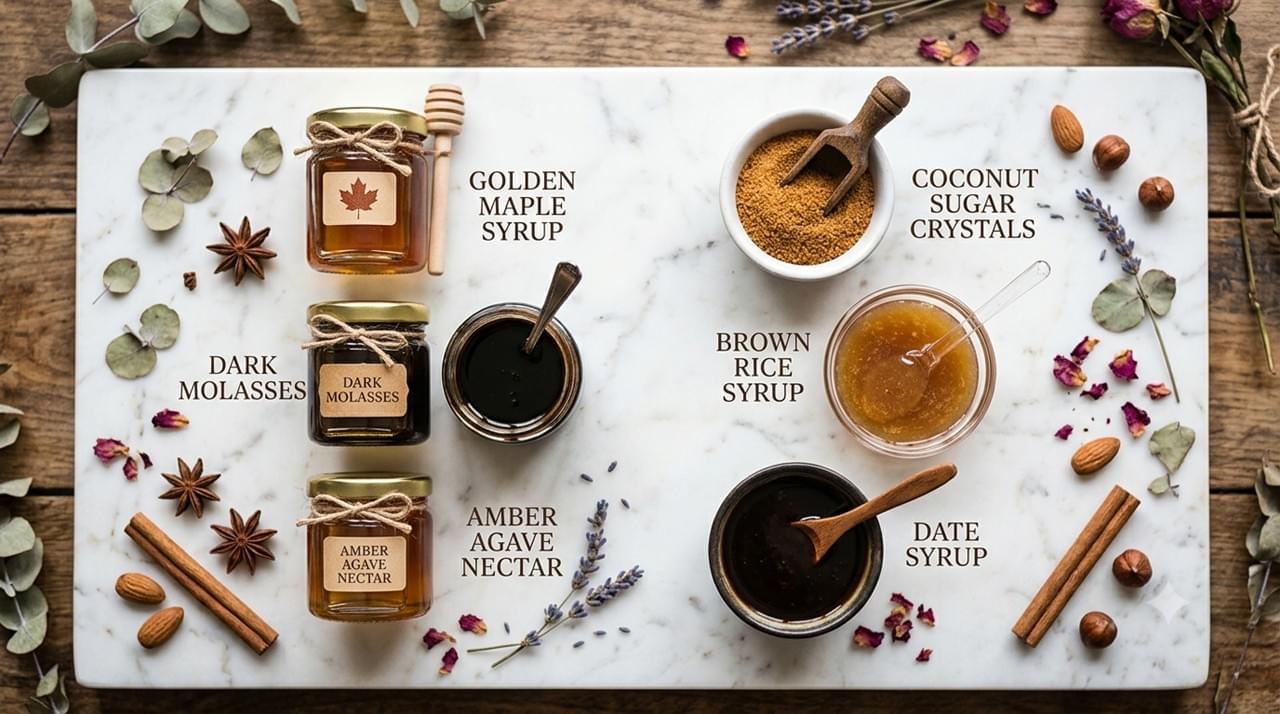
The global ingredient market is undergoing a profound structural shift. Consumer demand for clean labels, reduced refined sugars, and “made with real ingredients” transparency creates intense commercial pressure to replace high-fructose corn syrup (HFCS) and crystalline sucrose.
For food manufacturers, this structural evolution presents both an extraordinary market opportunity and a complex formulation challenge. The modern natural sweetener category includes dozens of commercially available alternatives, each possessing vastly different functional profiles, cost structures, and industrial behaviors.
This comprehensive technical guide breaks down the primary natural syrups and alternative sugar replacements available to industrial food processors, offering deep formulation insight and actionable purchasing strategies.
📈 The Natural Sweetener Market: Key Insights for Commercial Buyers
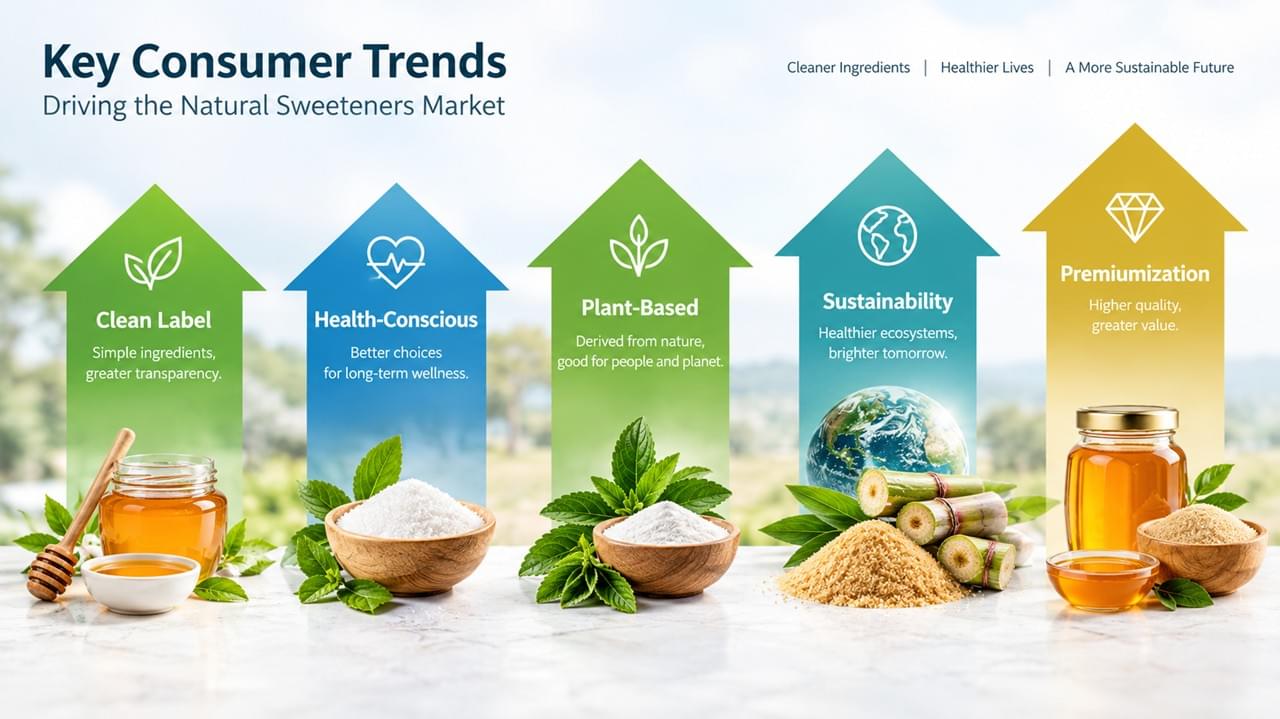
Why Clean Label Sweeteners Dominate Modern Market Demand
Market data reflects unambiguous consumer purchasing patterns heading into 2026. Verified retail performance metrics indicate that consumer products explicitly utilizing premium alternative sweetening agents command sustainable retail price premiums.
Shoppers routinely demonstrate a willingness to pay 20% to 40% more for brands that proudly feature recognizable plant-derived choices over legacy artificial syrups or highly refined white sugars.
For strategic procurement teams, the financial justification for implementing sustainable ingredient alternatives has never been stronger. The primary obstacle remains technical suitability, as no singular natural option can universally replace the structural, preservative, and texturizing traits of traditional cane sugar or standard corn syrups.
Critical Technical Selection Criteria
When evaluating liquid or granulated alternatives for complex formulations, R&D teams must systematically review several core operational variables:
| Evaluation Metric | Industrial Significance & Process Impact |
| Sweetness Intensity | Direct impact on batch formula quantities, shipping volumes, and overall unit economics. |
| Viscosity & Rheology | Dictates fluid dynamics during pumping, mixing, thermal processing, and filling line speeds. |
| Glycemic Index (GI) | Governs permissible front-of-pack nutritional declarations and healthy marketing positioning. |
| Flavor Profile & Notes | Determines whether the ingredient introduces unwanted off-notes or harmonizes with flavor systems. |
| Moisture Content | Directly influences final water activity ($a_w$), microbial stability, and product shelf life. |
| Thermal & Acid Stability | Crucial for preventing unexpected sugar inversion, degradation, or browning during processing. |
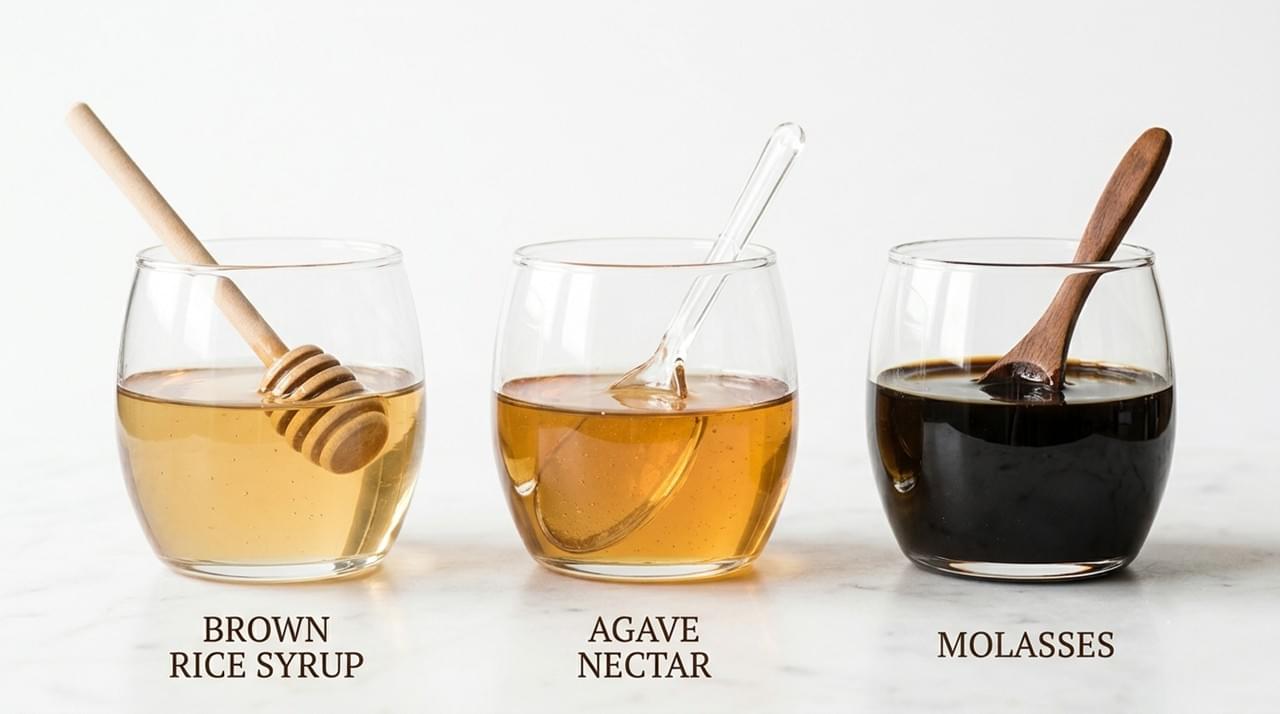
🌾 Brown Rice Syrup: The Workhorse of Clean-Label Industrial Sins
Brown rice syrup is manufactured through the controlled enzymatic hydrolysis of premium cooked rice starch. This process breaks down complex starches into a balanced matrix of maltose, glucose, and complex maltotriose chains. It yields a mild, remarkably clean flavor profile with a clean-label appeal that resonates perfectly with health-conscious buyers.
Chemical Composition and Performance Properties
| Carbohydrate Fraction | Analytical Concentration | Practical Formulation Impact |
| Maltose | 50% – 65% | Delivers structural binding power, mild sweetness, and low hygroscopicity. |
| Glucose | 20% – 30% | Provides immediate sweetness, fuels fermentation, and accelerates Maillard browning. |
| Maltotriose / Polymers | 10% – 20% | Increases batch viscosity, body, and mouthfeel while preventing crystallization. |
| Moisture Content | 20% – 25% | Must be factored into total formulation water balance calculations. |
⚠️ Glycemic Index Profile: Brown rice syrup carries a high glycemic index of approximately 98. Because maltose metabolizes rapidly into pure glucose, this ingredient is ideal for rapid energy delivery but less suited for targeted low-glycemic or diabetic-friendly dietary lines.
Primary Industrial Applications
- Nutritional Bars and Granola: Serves as the ultimate natural binder, ensuring excellent particle cohesion without brittle drying, while acting as an effective tool when formulating foods with natural sweeteners.
- Commercial Bakery: Enhances moisture retention, creates appealing golden crust colors, and contributes a neutral sweet background.
- Specialized Infant Nutrition: A historical staple, though modern producers must rigorously track and audit inorganic arsenic limits to comply with evolving international safety directives.
🍁 Pure Maple Syrup: Premium Authenticity and Heritage Appeal
Derived by concentrating the raw sap of Acer saccharum trees, authentic maple syrup provides unmatched premium positioning. Because commercial production is geographically concentrated around eastern Canada and the northeastern United States, global buyers must incorporate comprehensive risk mitigation into their long-term supply plans.
International Grade Classifications and Industrial Mapping
To achieve consistent results, food production plants must align their procurement with official grading frameworks, ensuring compliance with established Codex standards for sweeteners.
[Sap Harvest] ──> Golden (Delicate, Confectionery Base)
──> Amber (Classic, RTD Beverages & Sauces)
──> Dark (Robust, Commercial Baking Lines)
──> Very Dark (Intense Flavor, Industrial Extracts)
Nutritional Architecture and Formulation Tips
- Glycemic Index: Measures around 54, demonstrating a more gradual metabolic response than common table sugar.
- Micronutrient Density: Rich in essential manganese and zinc, alongside unique antioxidant polyphenols like quebecol.
- Sugar Distribution: Dominated by sucrose (~65%), with minimal free glucose and fructose fractions.
Because maple syrup brings a very bold, unmistakable flavor character, it shines best when used as a hero ingredient. For applications requiring less intense flavor profiles, industrial buyers can leverage specific amber grades or combine pure maple with complementary organic sweetening agents food manufacturing options to balance taste profiles and raw material expenses.
🌵 Agave Nectar: High-Potency, Low-Glycemic Sweetening Solutions
Processed from the extracted cores of Mexican Agave tequilana plants, agave nectar stands out for its high fructose concentration. This unique composition gives it a high sweetness profile combined with a low glycemic response.
Technical Performance Matrix
- Relative Sweetness: Evaluates to 1.4 to 1.6 times more potent than crystalline sucrose, enabling lower usage levels and reducing shipping weights.
- Glycemic Response: Registers a low value between 10 and 30, verified across global databases like the Glycemic Index Foundation database.
- Functional Humectancy: The massive fructose percentage (70% to 90%) makes it a powerful humectant, retaining moisture and extending shelf life in soft baked goods.
Sourcing Considerations for Agave Nectar
While agave offers exceptional technical performance, procurement managers must evaluate prevailing market sentiments. The high fructose content can occasionally face scrutiny from specific consumer demographics sensitive to high-fructose profiles. Balancing these marketing considerations against the undeniable processing benefits of agave forms a key pillar of an effective B2B syrup sourcing strategy.
🪵 Molasses: The Nutrient-Dense Heavyweight of Technical Formulations
Molasses is the thick, dark byproduct generated during industrial sugar refining. It represents the non-crystallizable syrup left behind after sucrose crystals are spun out, making it an excellent option for clean-label applications seeking a rustic appeal.
Commercial Grading and Analytical Breakdown
- Light Molasses: The first centrifugal extraction; contains the highest residual sugar content and a lighter flavor.
- Dark Molasses: Formed during the second extraction cycle; delivers a deeper color, bolder flavor, and increased mineral concentrations.
- Blackstrap Molasses: The final extraction stage; highly bitter, deeply colored, and packed with concentrated micronutrients.
[Cane Processing] ──> 1st Spin: Light Molasses (High Sugar, Mild Flavor)
──> 2nd Spin: Dark Molasses (Medium Sugar, Robust Body)
──> 3rd Spin: Blackstrap (Low Sugar, Ultra-High Minerals)
Blackstrap molasses acts as a functional food powerhouse, supplying significant concentrations of bioavailable iron, calcium, magnesium, and B vitamins. It is a highly effective tool for deep color development and rich flavor notes in rye breads, ginger cookies, and savory barbecue sauces.
🌴 Date Syrup and Coconut Sugar: Emerging Powerhouses
Date Syrup: The Multi-Functional Fruit Base
Produced by cooking and filtering whole, ripe dates into a smooth, dark syrup, date syrup is experiencing surging demand across Western natural food sectors. It provides a rich caramel-like flavor along with practical alternative sweetener functional properties, including naturally occurring dietary fibers, potassium, and magnesium. This makes it an ideal option for fruit-forward clean-label branding.
Coconut Sugar: Low-Glycemic Crystals
Harvested from the delicate blossoms of coconut palms, coconut sugar is processed by gently evaporating moisture until solid crystals form. It boasts an attractive glycemic index of roughly 35, largely due to naturally occurring prebiotic inulin fibers.
Its warm, brown-sugar flavor pairs perfectly with premium chocolate manufacturing and gluten-free baking lines. Furthermore, it offers an authentic sustainability story that appeals to eco-conscious consumers.
🛠️ Industrial Master Matrix: Application Sourcing Guide
To streamline your development process, use this technical application matrix to select the ideal option for your production lines, ensuring your ingredients align with current USDA organic certification for syrups.
| Target Food Application | Recommended Sweetening Base | Primary Technical Justification |
| Nutritional Bars & Inclusions | Brown Rice Syrup / Pure Honey | Delivers reliable particle cohesion; provides a sticky, non-crystallizing texture. |
| RTD Specialty Beverages | Agave Nectar / Light Maple | Offers rapid dissolution in cold liquids; high sweetness allows lower usage rates. |
| Soft-Baked Goods | Honey / Pure Agave Syrup | High fructose content maximizes moisture retention and extends shelf life. |
| Low-Glycemic Formulations | Agave / Coconut Palm Sugar | Proven low-GI values support clean-label nutritional claims. |
| Functional Micronutrient Foods | Blackstrap Molasses / Date Base | Naturally high mineral, iron, and antioxidant content. |
| Rich Flavor Formulations | Dark Maple / Robust Molasses | Delivers bold flavor profiles that cut through complex whole-grain matrices. |
| Bulk Neutral Carriers | Clarified Rice Syrup / Light Agave | Minimizes sensory impact while adding bulk solids cost-effectively. |
To delve deeper into regulatory compliance, raw material testing, and international shipping protocols, please read our specialized Quality Standards and Certifications manual, review our exhaustive Comparative Analysis of Natural Sweeteners, or explore our Global Sourcing Guide.
For more detailed technical data regarding the Health and Nutritional Impacts of Sweeteners or to explore our complete portfolio, check out our Honey Varieties Production Guide.
📥 Commercial Ingredient Procurement
Ready to scale up production or optimize your current formulations? Contact our technical engineering group today to secure analytical data sheets, verify lot-to-lot consistency parameters, and order customized samples.


 English
 Arabic
 French
 German
 Portuguese
 Russian
 Spanish
 Japanese
 Korean