
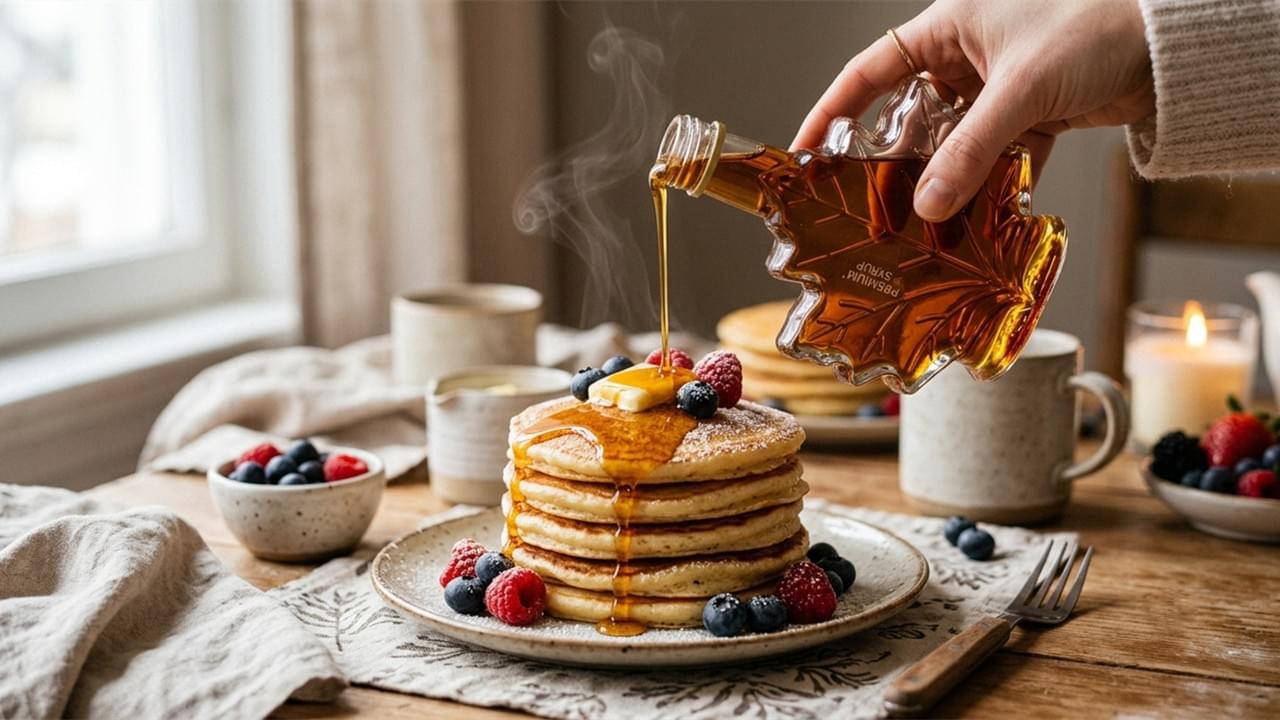
Pure bulk maple syrup stands out as one of the most celebrated natural sweeteners in the global food industry, yet its supply is surprisingly concentrated in a tiny geographical footprint. With nearly 70% of global supply coming straight out of Quebec, Canada—and most of the rest from Vermont and neighboring Northeast US states—food manufacturers face unique supply chain dynamics. Whether you are reformulating baked goods, launching specialty beverages, or sourcing clean-label ingredients, understanding production mechanics, quality metrics, and market structure is essential. This guide covers everything buyers and product developers need to know about procuring and formulating with pure bulk maple syrup. 🍁
1. 🌲 Crafting Pure Maple Syrup: From Forest Sap to Liquid Gold
🔬 The Sap-to-Syrup Journey for Bulk Maple Syrup
Unlike conventional industrial sugars, pure bulk maple syrup cannot be synthesized in a chemical plant. It relies entirely on a brief, weather-dependent seasonal window that gives it an authentic provenance story and real supply limits. 🌲
- Sap Collection (Late February – April): Sugar makers drill shallow tap holes into mature sugar maple trunks (Acer saccharum). Traditional buckets or modern tubing systems equipped with vacuum pressure collect sap when daytime temperatures rise above freezing while nighttime temperatures drop below 0°C. This natural freeze-thaw pressure differential pumps the sap out over a short 4 to 8 week harvest window. 🪣
- Sap Composition: Raw sap consists of 97% to 98% water and only 1.5% to 3% sucrose. A healthy tree yields roughly 40 to 80 liters of raw sap each season. 💧
- Evaporation & Sugar House Processing: At the sucrerie (sugar house), massive open evaporators boil raw sap to remove water and concentrate natural sugars. It takes approximately 40 liters of raw sap to yield just 1 liter of finished syrup. This high energy requirement explains why pure bulk maple syrup commands premium pricing among food manufacturing sweeteners. 🔥
- Grading & Density Control: Once sap reaches 66° to 68° Brix, syrup makers filter out mineral precipitates (“sugar sand”), grade the batch for color and clarity, and seal it into food-grade drums or commercial totes. 📊
📈 Global Supply Dynamics and Bulk Maple Syrup Reserves
Global production reflects intense regional concentration. In 2023, Canadian producers harvested approximately 14,900 metric tons of maple syrup, with Quebec supplying roughly 70% of the world’s total volume. 🇨🇦
The Quebec Maple Syrup Producers (PPAQ) maintains a strategic reserve to balance annual yield variations, maintaining stable price floors while limiting sudden volume surges. As a result, B2B procurement teams looking for stable bulk maple syrup supplies should establish forward contracts early in the year (January–February) to guarantee delivery allocations before peak seasonal demand sets in. 🤝
2. 📜 The International Maple Syrup Grading System
🏅 Understanding the Bulk Maple Syrup Grading Standard
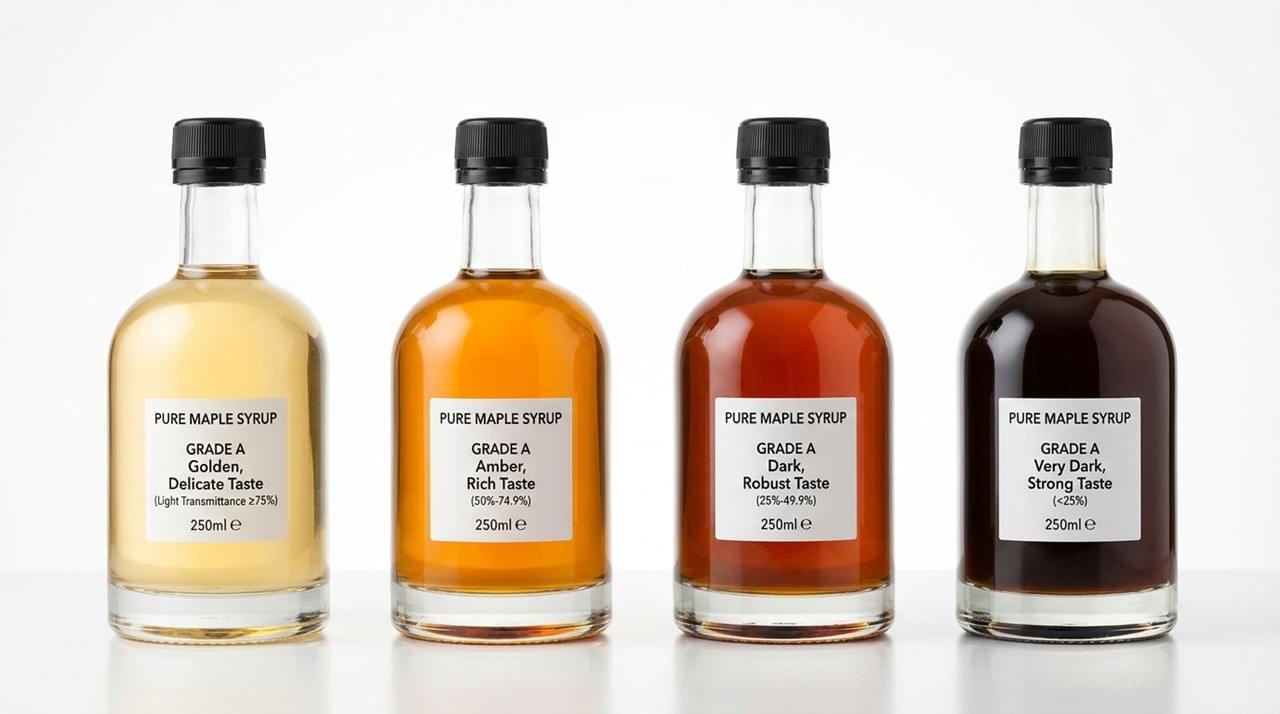
Before 2015, North American buyers had to navigate confusing regional standards (such as Canadian No. 1/2/3 versus US Grade A/B). Today, the industry operates under a unified International maple syrup grading standard that simplifies cross-border commercial transactions and quality verification. 🌎
| Grade | Visual Color | Light Transmittance (% Tc) | Flavor Profile | Recommended Food Applications |
| Grade A: Golden | Pale / Golden | Light & Clear (≥ 75%) | Delicate, subtle maple | Fine retail packaging, delicate dessert toppings |
| Grade A: Amber | Amber | Warm Honey (50–74.9%) | Rich, classic maple | Standard retail, general tabletop, soft beverages |
| Grade A: Dark | Dark Amber | Deep Bronze (25–49.9%) | Robust, intense maple | Commercial baking, gourmet glazes, food service |
| Grade A: Very Dark | Very Dark | Near Opaque (< 25%) | Strong, heavy maple | Industrial flavoring, blending, processed foods |
| Processing Grade | Variable | Any | Commercial quality | Heavy food manufacturing & ingredient extraction |
This updated maple syrup grading system gives food formulators precise control over visual appearance and flavor intensity when sourcing ingredients for commercial production lines. 🎯
3. 🧪 Nutritional Profile & Functional Bioactives
🥗 Essential Nutrients vs. Refined Sugars
Pure maple syrup offers a distinct nutritional advantage over refined cane sugar and high-fructose corn syrup. It serves as a compelling option when exploring our comprehensive Natural Syrups and Alternative Sweeteners Guide. 🍯
- Caloric Value: ~260 kcal per 100g (comparable to raw honey). ⚡
- Sugar Profile: ~60g sucrose per 100g, delivering clean sweetness without artificial aftertaste. 🍬
- Glycemic Index: ~54 (moderate GI, notably lower than refined sucrose at ~65). 📉
- Micronutrient Density: Exceptionally rich in manganese (65% Daily Value per 100g) and zinc (28% DV), along with useful amounts of potassium (6% DV) and calcium (7% DV). 🥗
🧬 Quebecol and Unique Polyphenols
Beyond minerals, maple syrup contains over 67 bioactive polyphenols. Most notably, Quebecol—a unique phenolic compound created during the thermal evaporation process—does not exist in raw sap or any other plant in nature. Ongoing research highlights its anti-inflammatory and antioxidant properties, giving brand managers a compelling story when reviewing our Comparative Analysis of Sweeteners. 🌿
4. 🍽️ Commercial Applications of Bulk Maple Syrup in Food
☕ Beverage Innovations
As consumer demand for clean-label drinks grows, bulk maple syrup has emerged as a star ingredient across multiple beverage categories:
- Artisan Coffee & Craft Brews: Maple cold brews and maple lattes are booming in commercial coffee chains. ☕
- Functional Drinks & Sodas: Offers subtle caramel notes and natural minerals in RTD teas, sodas, and wellness shots. 🥤
- Craft Alcohol: Breweries utilize dark grades for maple-fermented stouts, ales, and small-batch spirits. 🍻
🥐 Bakery, Confectionery & Savory Formulations
In commercial bakeries, pure maple syrup formulation enhances moisture retention, improves crust browning via Maillard reactions, and adds rich flavor depth. In confectionery, it forms the backbone of maple candies, chewy caramels, and nougats. Furthermore, dark grades provide a balanced sweet-savory profile for glazes, marinades, and BBQ sauces. 🍞
🏷️ Clean-Label Marketing Advantages
Placing “Made with Pure Maple Syrup” on front-of-pack labeling resonates deeply with health-conscious consumers. According to our insights on Global Market Trends in Natural Sweeteners, clean-label positioning drives higher brand loyalty across North America, Europe, and Asia. Leveraging premium natural ingredients allows product developers to replace synthetic corn syrups with an authentic, single-ingredient sweetener. 💡
For practical tips on replacing artificial sugars, explore our guide on Formulating Foods with Natural Sweeteners. 📑
5. 📦 Strategic Sourcing and Bulk Maple Syrup Procurement
When sourcing ingredients for industrial manufacturing, keep these critical operational factors in mind:
- Verify Certificate of Analysis (CoA): Always check light transmittance (% Tc) and Brix levels (66–68°) on every batch CoA to verify exact product specifications. 📄
- Organic Certification Requirements: Certified organic maple syrup requires strict forest management without synthetic pesticides, fertilizers, or prohibited anti-foaming agents during evaporation. 🌱
- Lead Times & Seasonal Timing: Sap harvest happens strictly between March and May. Out-of-season orders rely on stored strategic reserves. Plan large procurement cycles with 3 to 6-month lead times to secure competitive pricing. ⏳
- Partnering with Industry Authorities: Consult resources from the Quebec maple syrup producers federation to track official crop yields, market conditions, and regulatory updates. 🏛️
Ready to upgrade your product line with authentic maple sweetness? Request bulk maple syrup specifications and pricing to connect directly with our B2B procurement team today. 📞
 English
 Arabic
 French
 German
 Portuguese
 Russian
 Spanish
 Japanese
 Korean