
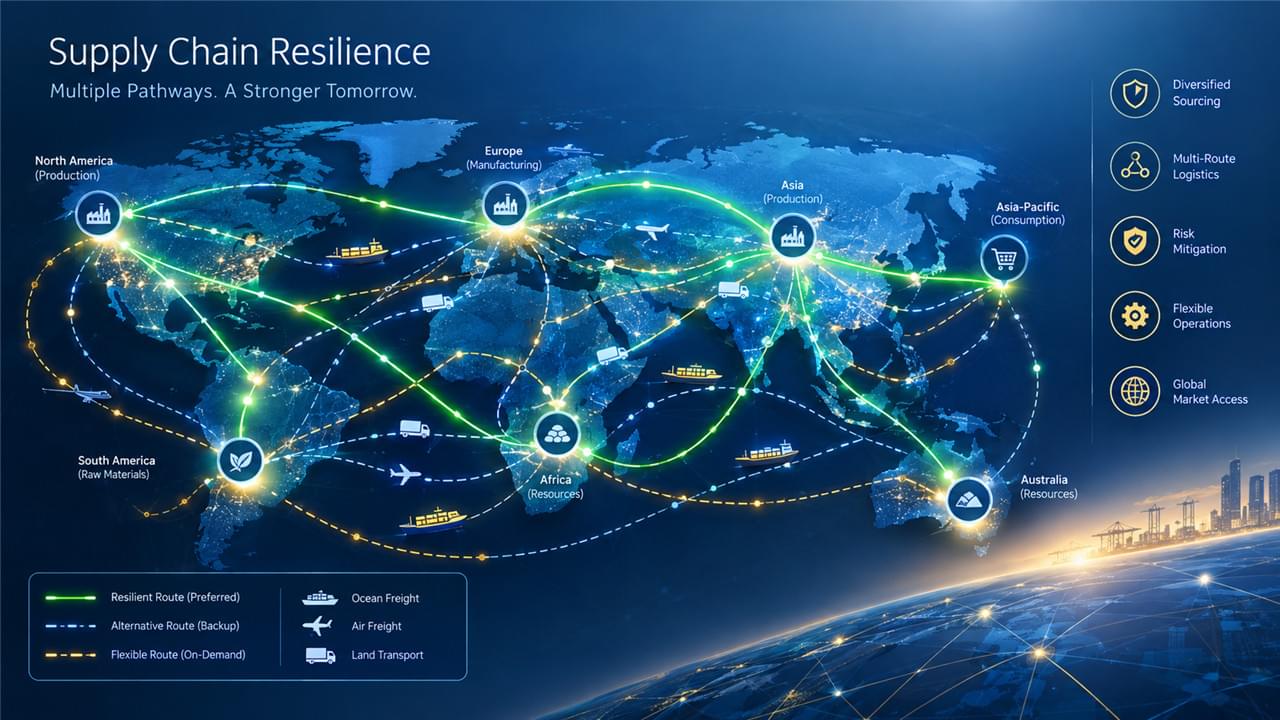
The 2020–2022 supply chain crisis exposed structural vulnerabilities in food ingredient procurement that most buyers had underestimated — and the natural sweetener supply chain turned out to be unusually sensitive. Production concentrated in specific geographies, long lead times, and non-negotiable quality compliance make a bad disruption worse. Four years on, the lessons have hardened into strategy. Here’s what resilient procurement teams changed, and where the natural sweetener supply chain is heading through 2027.
Table of Contents
Toggle⭐ COVID’s Test of the Natural Sweetener Supply Chain
What happened is familiar in outline: port congestion, container shortages, and processing facility shutdowns in key producing regions hit all at once — simultaneous availability and cost crises. For sweeteners specifically, the damage was uneven but sharp:
- China maintained honey production, but export logistics broke down; container premiums spiked 300–400%
- New Zealand Manuka supply tightened badly as air freight capacity collapsed
- EU import bottlenecks created temporary shortages for downstream food manufacturers
- Honey supply disruption wasn’t just volume — price volatility ran until container rates finally returned to pre-2020 levels by 2023–24
The teams that came through best had made three adjustments: safety stock for natural sweeteners rose from roughly 6 weeks to 12–16 weeks; buyers who had qualified multiple origins kept supplying when single-origin sources failed; and long-standing supplier relationships earned preferential allocation during shortages. For the demand-side picture behind all this, our Global Market Trends overview has the numbers.
🛡️ Food Supply Chain Resilience: The Framework That Stuck
Food supply chain resilience stopped being a slide-deck word in 2020 and became an operating discipline. Based on what worked between 2020 and 2023, resilient procurement now rests on three pillars: origin diversification, documentation pre-qualification, and forward contracting. The next section covers the first in detail; the other two are simpler than they sound.
Documentation pre-qualification means qualifying alternative suppliers before you need them — compliance documentation review, sample testing, trial orders — so a crisis never forces a decision made under pressure.
Forward contracting fits seasonal sweeteners especially well. Maple syrup and honey have production cycles you can calendar around; volume commitments made before harvest season consistently beat spot purchasing after it. It’s the difference between reserving capacity and competing for scraps. Our Global Honey Sourcing Guide covers the seasonal mechanics by origin.
🗺️ Origin Diversification in the Natural Sweetener Supply Chain
The heart of any modern sweetener procurement strategy is a diversification map. Here’s the working version:
| Sweetener | Primary Origin | Backup Origins to Qualify |
|---|---|---|
| Honey | China | Argentina, Ukraine, India, Brazil |
| Maple syrup | Quebec, Canada | US Vermont; recognize supply constraints |
| Agave | Mexico | Limited alternatives; manage through inventory |
| Coconut sugar | Indonesia, Philippines | Both should be qualified; same region risk |
| Brown rice syrup | China | US domestic; Europe for local supply |
Two rows deserve a second look. Coconut sugar’s two origins share the same typhoon-exposed region — qualifying both is necessary but not sufficient, so inventory strategy carries real weight there. Agave has no meaningful second origin at all, which means Mexico exposure is managed through contracts and stock, not substitution. The World Bank global supply chain analysis is a useful reference for modeling these concentration risks.
📡 Traceability Tech Reshaping the Natural Sweetener Supply Chain
Technology adoption accelerated for one simple reason: consumers and retailers started asking where ingredients actually came from, and suppliers needed answers at lot-level precision. Three developments matter most:
- Blockchain-based honey tracking — origin verification from apiary GPS coordinates to packaging, with several pilot programs now reaching commercial scale
- QR code provenance — consumer-facing codes linking to supply chain documentation, increasingly common in premium honey retail
- API-connected lot tracking — real-time data flowing between supplier, importer, and manufacturer
Testing is evolving just as fast: portable NMR devices are emerging for rapid field-deployable honey authentication, DNA-based botanical origin verification is in advanced development for fraud detection, and AI anomaly detection is being applied to historical test data to flag statistical outliers that suggest adulteration. The practical effect: verification is getting faster and cheaper, which raises the floor for everyone. Our Quality Standards and Certifications guide explains what to request from suppliers now.
🔭 Natural Sweetener Supply Chain Outlook 2026–2027
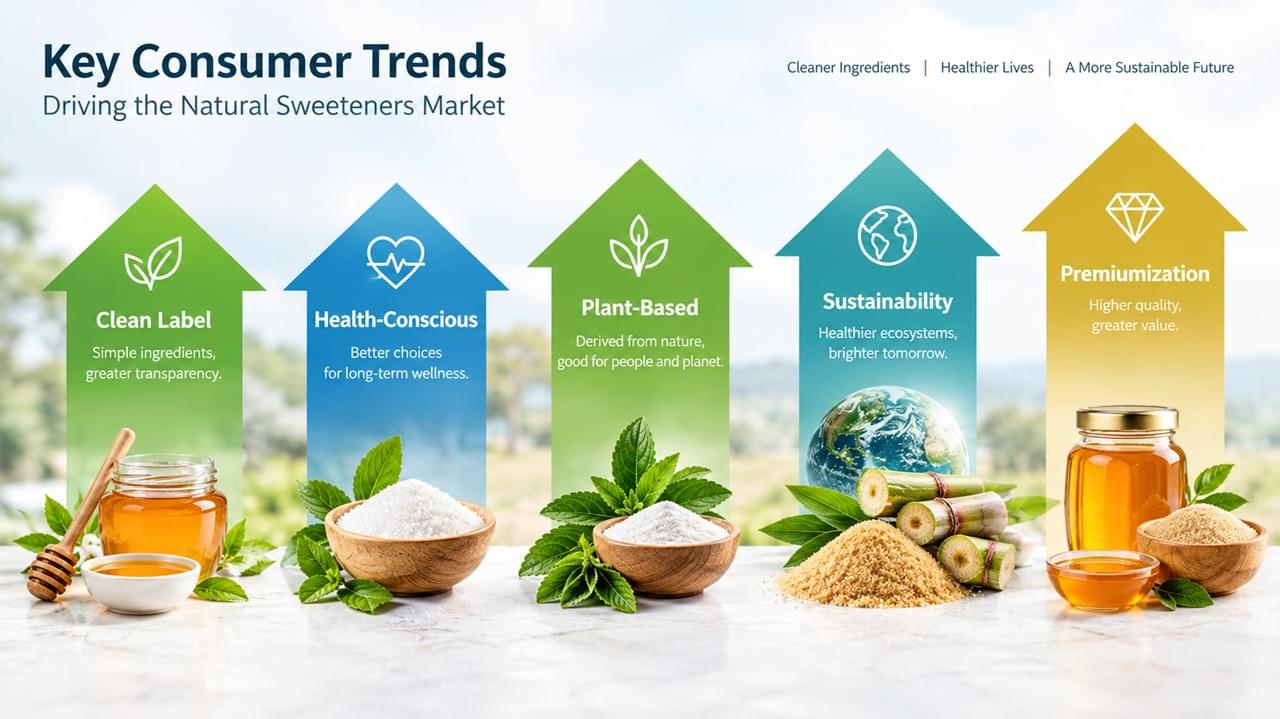
Demand: strong continued growth across categories. The clean-label shift is structural; no reversal is in the data.
Supply: climate variability is the primary uncertainty. Documented climate pressure affects honey production in key origins — China, Argentina, Ukraine — and supply concentration in coconut sugar and maple syrup will keep paying a premium to diversified buyers.
Regulatory: EU and UK pesticide MRLs keep tightening. Track developments and make sure supplier testing keeps pace — a lagging lab panel is a slow-motion compliance problem. See also our Sustainability and Ethical Sourcing coverage for the parallel sourcing expectations.
Technology: traceability investments will separate suppliers. Buyers who require traceability documentation now will hold better supply security as the tool shifts from premium feature to standard expectation — and the FAO food supply chain resilience report is a solid baseline for the macro view.
 English
 Arabic
 French
 German
 Portuguese
 Russian
 Spanish
 Japanese
 Korean