
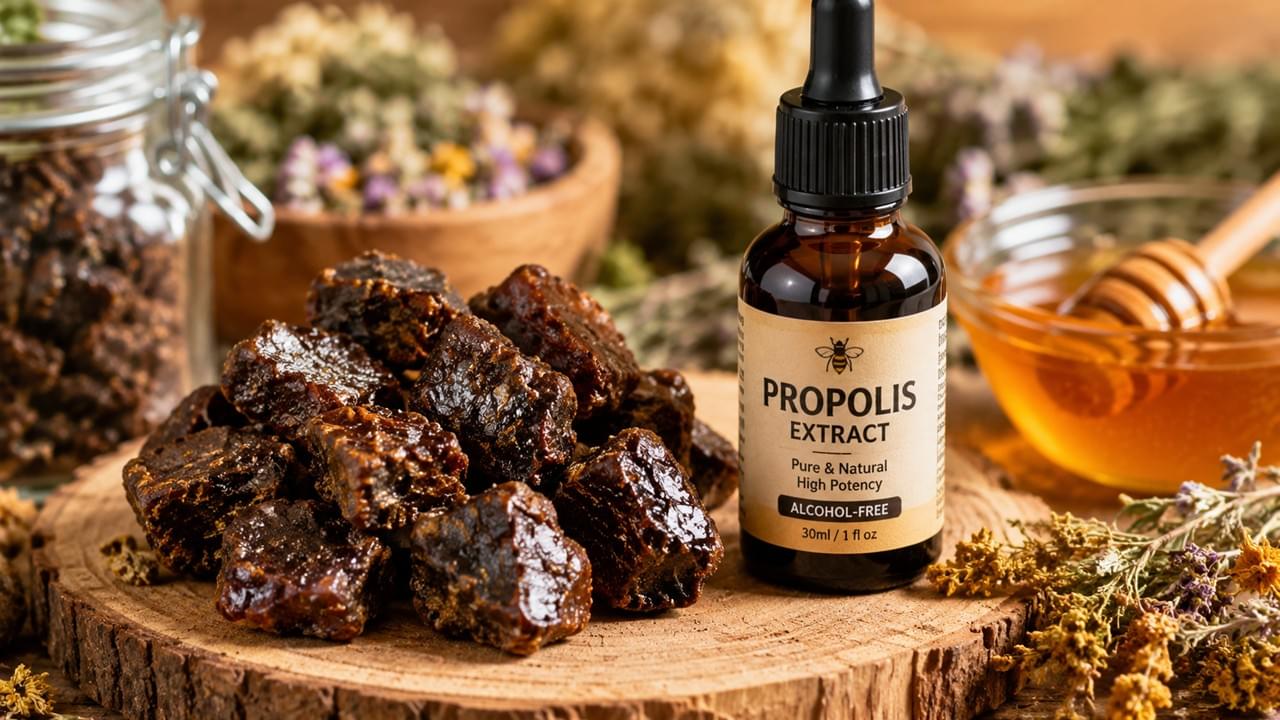
Propolis Extract has become one of the most valuable bee-derived ingredients in today’s health, nutrition, and personal care industries. Backed by decades of scientific research, this natural resinous substance offers a unique combination of antibacterial, antioxidant, antifungal, and anti-inflammatory properties.
For manufacturers of dietary supplements, functional foods, oral care products, and cosmetics, the growing challenge is no longer proving the effectiveness of propolis. Instead, success depends on sourcing a standardized, high-quality ingredient that delivers consistent bioactive performance from batch to batch.
This guide explores the science behind propolis, the importance of origin and standardization, and the expanding commercial opportunities available to B2B buyers worldwide.
🍯 Understanding Propolis and Its Natural Origins
Propolis is a resinous material collected by honeybees from tree buds, bark, and other botanical sources. Bees blend these plant resins with enzymes and wax to create a protective substance used throughout the hive.
Inside the colony, propolis serves several critical functions:
✔ Sealing cracks and openings
✔ Protecting hive surfaces from microbial contamination
✔ Maintaining a hygienic environment for brood development
✔ Encapsulating foreign objects that cannot be removed from the hive
Because propolis originates from plant resins, its chemical composition varies significantly depending on local vegetation and geographic region.
🌍 Why Propolis Extract Origin Matters
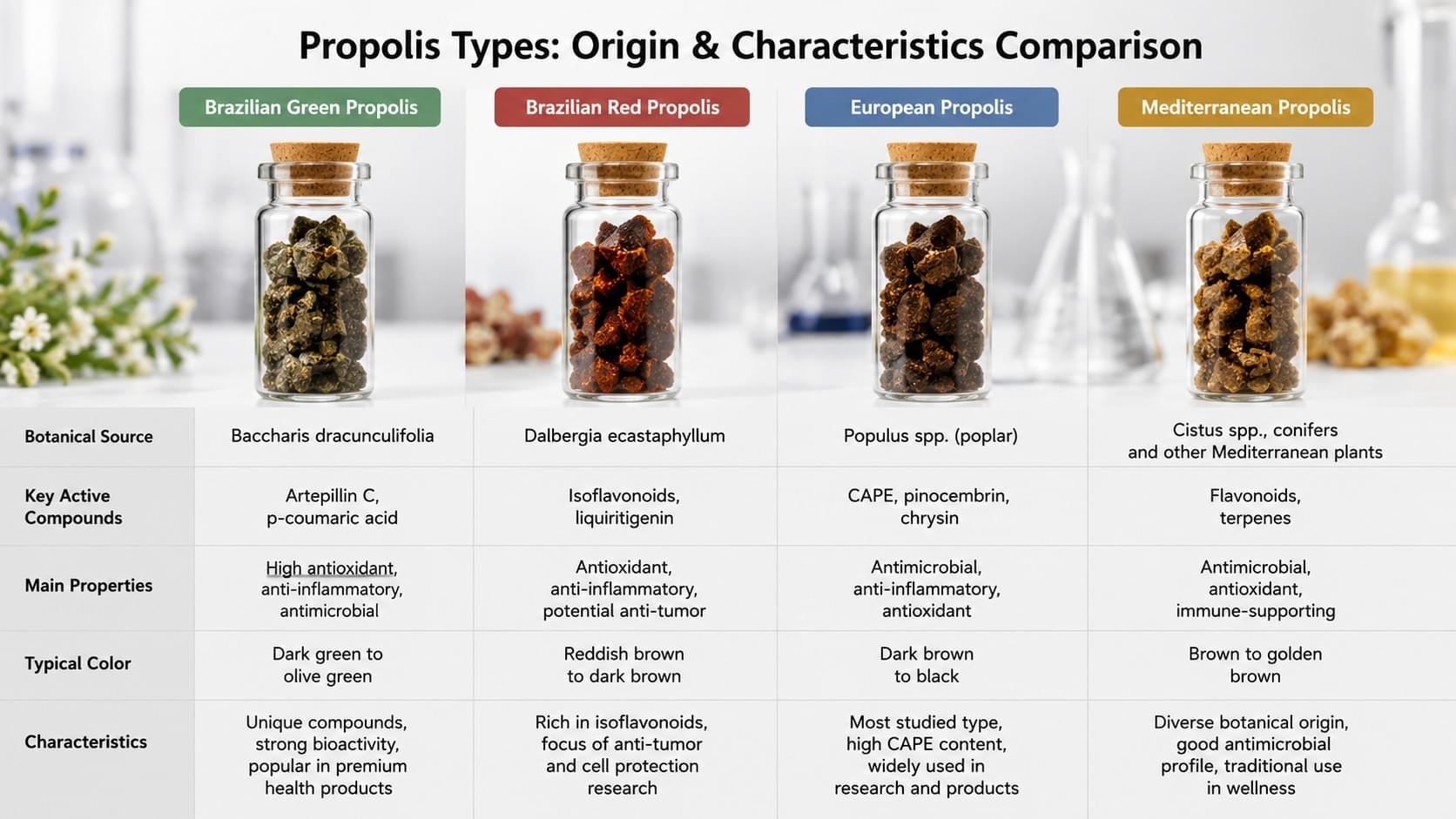
One of the most important purchasing considerations for B2B buyers is geographic origin. Different botanical sources create distinct bioactive profiles, influencing both functionality and commercial positioning.
| Origin | Main Resin Source | Major Bioactive Compounds | Key Characteristics |
|---|---|---|---|
| Brazilian Green | Baccharis dracunculifolia | Artepillin C, p-coumaric acid | Strong antioxidant profile |
| Brazilian Red | Dalbergia ecastaphyllum | Isoflavonoids, liquiritigenin | Emerging anti-tumor research |
| European & Chinese | Poplar species | CAPE, pinocembrin, chrysin | Most extensively researched |
| Mediterranean | Cistus and conifers | Flavonoids, terpenes | Excellent antimicrobial activity |
| New Zealand | Leatherwood | Prenylated flavonoids | Premium niche category |
For this reason, buyers should never purchase generic propolis products without clearly defining origin requirements and active compound specifications.
🔬 How Propolis Extract Delivers Bioactive Benefits
Propolis Extract and Flavonoid Activity
Flavonoids are among the most important compounds found in propolis and contribute significantly to its biological effects.
Key flavonoids include:
| Compound | Primary Activity |
|---|---|
| Pinocembrin | Antibacterial and antifungal |
| Chrysin | Anti-inflammatory and antioxidant |
| Galangin | Antibacterial support |
| Quercetin | Broad-spectrum antioxidant |
These compounds help explain why propolis has become a popular ingredient in immune support, oral care, and skin health formulations.
Propolis Extract and CAPE
Caffeic Acid Phenethyl Ester (CAPE) is one of the most studied compounds found in poplar-type propolis.
Scientific research has investigated CAPE for:
✔ Inflammatory response regulation
✔ Antioxidant protection
✔ Cellular defense mechanisms
✔ Antimicrobial activity
Because of its significance, CAPE is often used as a marker compound in standardized propolis extract specifications.
Brazilian Green Propolis and Artepillin C
Among all varieties, Brazilian green propolis has attracted particular attention due to its unique compound, Artepillin C.
This bioactive component is rarely found in other propolis types and has become a key differentiator in premium formulations, especially within Japanese and Asian health product markets.
Manufacturers seeking high-value positioning frequently select Brazilian green propolis to support premium product claims and market differentiation.
⚙️ Propolis Extract Standardization: The Key to Consistent Quality
Available Standardized Propolis Extract Formats
Commercial suppliers offer propolis in several processing formats to meet different application requirements.
| Extract Type | Extraction Medium | Typical Applications |
|---|---|---|
| Ethanol Extract | Ethanol | Tinctures, sprays, capsules |
| Water Extract | Water | Functional beverages |
| CO₂ Extract | Supercritical CO₂ | Premium formulations |
| Propylene Glycol Extract | PG | Cosmetics and skin care |
| Dry Powder Extract | Carrier-based | Tablets and capsules |
Each format offers different advantages regarding solubility, flavor impact, active compound retention, and formulation flexibility.
Key Propolis Extract Standardization Parameters
When evaluating suppliers, buyers should request detailed Certificates of Analysis that include:
✔ Total flavonoid content
✔ Total polyphenol content
✔ CAPE concentration
✔ Artepillin C concentration (for Brazilian green propolis)
✔ Moisture and ash values
✔ Residual solvent data
A standardized propolis extract provides significantly greater formulation consistency than raw propolis, reducing variability during production.
💊 Propolis Extract for Dietary Supplements
The dietary supplement sector remains the largest commercial market for propolis.
Common applications include:
- Immune support capsules
- Throat sprays
- Lozenges
- Liquid tinctures
- Wellness blends
The popularity of propolis for dietary supplements continues to increase as consumers seek naturally sourced ingredients supported by scientific research.
Manufacturers often combine propolis with honey, royal jelly, vitamin C, and botanical extracts to create premium wellness formulations.
For companies developing broader bee-product portfolios, our guide to Bee Products Complete Guide provides additional formulation insights.
🦷 Propolis Extract in Oral Care Products
Oral care is one of the most established commercial applications for propolis worldwide.
Its bioactive compounds have been widely studied for their activity against microorganisms associated with dental plaque and oral hygiene challenges.
Today, propolis is commonly found in:
- Toothpaste
- Mouthwash
- Oral gels
- Breath sprays
- Gum health products
The ingredient is particularly attractive to brands seeking natural alternatives within clean-label oral care categories.
🥤 Propolis Extract in Functional Foods and Beverages
Functional food manufacturers increasingly incorporate propolis into products designed to support wellness and immunity.
Popular applications include:
✔ Wellness shots
✔ Herbal beverages
✔ Functional teas
✔ Honey-propolis blends
✔ Nutritional drinks
Since propolis possesses a naturally strong flavor profile, careful dosage optimization is required to balance sensory performance with bioactive efficacy.
Brands interested in broader ingredient compliance considerations may also benefit from reviewing Honey Quality Standards and Certifications.
✨ Propolis Extract in Cosmetics and Skin Care
The cosmetic industry has embraced propolis because of its multifunctional properties and natural origin.
Modern applications include:
- Acne care products
- Skin repair formulations
- Facial serums
- Anti-aging products
- Sensitive skin solutions
Its combination of antioxidant and antimicrobial activity aligns well with current consumer demand for naturally derived active ingredients.
Manufacturers exploring holistic wellness positioning can further reference Health and Nutritional Impacts of Natural Products.
📋 Propolis Extract Procurement Checklist for B2B Buyers
Before selecting a supplier, buyers should conduct a thorough technical evaluation.
✔ Origin Verification
Specify the desired propolis source, such as Brazilian green propolis or poplar-type propolis.
✔ Standardization Requirements
Request guaranteed minimum levels for flavonoids, polyphenols, and marker compounds.
✔ Safety Testing
Require documentation covering:
- Pesticide residues
- Heavy metals
- Microbiological contamination
- Residual solvents
✔ Regulatory Documentation
Ensure suppliers can provide Certificates of Analysis, specification sheets, and traceability records.
✔ Sustainability Assessment
Evaluate sourcing practices and environmental responsibility. Companies interested in responsible ingredient procurement can also review Sustainability and Ethical Sourcing .
🌟 Final Thoughts
As demand for natural health ingredients continues to grow, Propolis Extract is positioned as one of the most versatile bee-derived ingredients available to manufacturers. Its broad range of bioactive compounds, extensive scientific backing, and adaptability across supplements, cosmetics, oral care, and functional foods make it an increasingly valuable ingredient for product innovation.
For B2B buyers, long-term success depends on selecting a standardized propolis extract with clearly defined active compounds, verified origin, and comprehensive quality documentation. By focusing on consistency rather than commodity sourcing, manufacturers can unlock greater formulation performance, stronger consumer trust, and more sustainable commercial growth.
For additional scientific reading, manufacturers can consult the research published by the National Center for Biotechnology Information (NCBI) on propolis biological activities and the Brazilian propolis standardization review.


 English
 Arabic
 French
 German
 Portuguese
 Russian
 Spanish
 Japanese
 Korean