
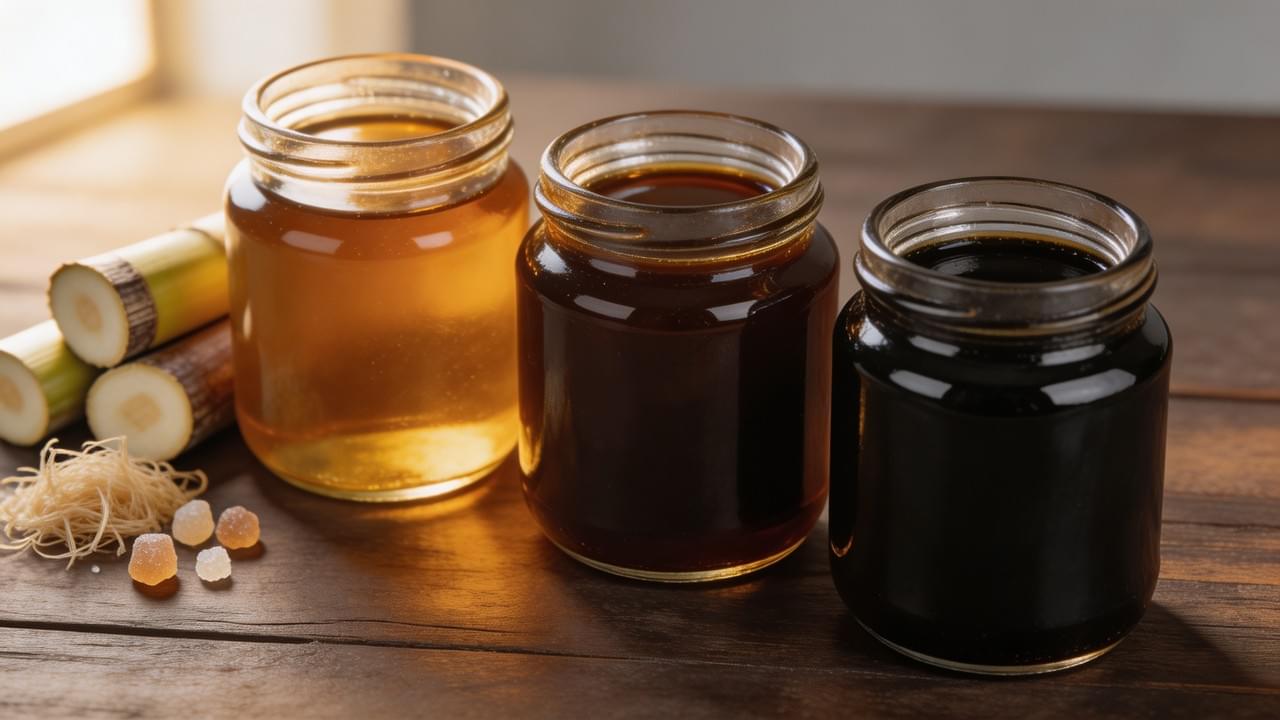
Molasses has a reputation problem. To most shoppers it’s either the sticky brown stuff in grandma’s gingerbread or a forgotten jar at the back of the pantry — and neither does it justice. In the bulk ingredient aisle, though, molasses for food manufacturing earns a second look: it’s a byproduct of sugar refining that brings minerals, bold flavor, and clean-label appeal no other liquid sweetener quite matches. Here’s what makes it worth the shelf space, and how to pick the right type for your product.
⭐ Why Molasses for Food Manufacturing Stands Out
Molasses is what’s left after sugarcane or sugar beet juice gives up its sucrose crystals. That leftover was treated as waste for decades; today it’s one of the smarter buys in the sweetener aisle. The headline number is mineral density: blackstrap carries about 3.5 mg of iron and 200 mg of calcium per tablespoon — levels no honey, agave, or refined sugar can approach.
That’s not a nutrition-science curiosity. It means a functional bar, a bakery mix, or a breakfast syrup can claim added minerals without synthetic fortifiers. Because molasses is just concentrated cane or beet juice, the label stays short and pronounceable.
How Molasses for Food Manufacturing Compares
Across the category, molasses for food manufacturing wins on minerals but gives up sweetness — you need about 25% more of it to match refined sugar’s punch. For a side-by-side on sweetness, cost, and handling, see our Comparative Analysis of Sweeteners; for the wider category, start with the Natural Syrups and Alternative Sweeteners Guide.
🥄 Three Types of Molasses for Food Manufacturing
Molasses comes in shades, and each shade behaves differently in a formula. The extraction stage decides everything: with every boil and crystallization, more sugar is pulled out and the syrup turns darker, less sweet, and more mineral-heavy.
| Stage | Name | Sugar Content | Color | Flavor Profile |
|---|---|---|---|---|
| 1st crystallization | Light molasses | 70–75% | Light brown | Sweet, mild |
| 2nd crystallization | Dark molasses | 60–65% | Dark brown | Rich, robust |
| 3rd crystallization | Blackstrap molasses | 45–60% | Nearly black | Bitter-sweet, intense |
| Fully ripe cane, no sulfur | Unsulphured molasses | 65–70% | Medium dark | Cleaner, sweeter |
| Beet sugar refining | Beet molasses | Variable | Dark | Earthy, distinct |
The pattern is simple: each boil darkens the syrup, deepens the flavor, and concentrates the minerals.
🧪 Sulphured vs. Unsulphured Molasses
One spec point trips up buyers more than any other: sulfur. Young green cane used to be treated with sulfur dioxide to stop spoilage, which left a sharp, chemical note. Unsulphured molasses comes from fully ripe cane and skips the SO₂ step, so it tastes cleaner and sweeter. For food use, unsulphured is the default — write it into every spec sheet, keep SO₂ below 10 ppm, and demand per-lot compliance. Under EU regulations on sulfur dioxide in food, the limits are strict — traceability isn’t optional.

📊 Nutrition and Flavor: What Molasses Delivers
Blackstrap Molasses: The Iron-Calcium Powerhouse
Blackstrap is the one that earns the “superfood” headlines, and for once the hype mostly holds. One tablespoon (about 20 g), per USDA nutrition data:
| Nutrient | Amount | % Daily Value |
|---|---|---|
| Calories | 47 kcal | 2% |
| Total sugars | 11 g | — |
| Iron | 3.5 mg | ~20% DV |
| Calcium | 200 mg | ~15% DV |
| Magnesium | 48 mg | ~11% DV |
| Potassium | 490 mg | ~10% DV |
| Vitamin B6 | 0.3 mg | ~15% DV |
| Manganese | 0.5 mg | ~20% DV |
No other liquid sweetener gets close on this. Formulators chasing natural fortification usually cite blackstrap molasses iron and calcium content first — at 5–10% inclusion in a functional formula you can support mineral-content claims where your market’s labeling thresholds allow. For how honey compares, see Health and Nutritional Impacts of Natural Sweeteners.
😋 Choosing Molasses for Food Manufacturing by Flavor
Flavor is where product development often goes wrong, because each type lands differently on the palate:
- Light molasses — sweet with soft caramel notes; an easy swap for brown sugar in bakery systems.
- Dark molasses — robust, toffee-like, faintly bitter; the reference for “molasses flavor.”
- Blackstrap — intense, bittersweet, almost smoky; use at 1–3% as a flavor modifier, not the main sweetener.
- Beet molasses — earthier and less pleasant in food; mostly animal feed and fermentation, not labels.
🏭 Top Applications of Molasses for Food Manufacturing
Bakery Classics and Better-for-You Bakes
Molasses is baked into food culture for good reason. Gingerbread, spiced cookies, brown bread, and bran muffins all lean on it for color, moisture, and that deep, warming note. Its hygroscopicity — the ability to hold onto water — also extends shelf life, which matters when you’re shipping nationally. Barbecue sauces and marinades are another natural home: brown or dark molasses adds sweetness, gloss, and complexity that plain sugar can’t.
Functional Foods, Beverages, and Fermentation
Blackstrap is quietly having a commercial renaissance:
- Iron fortification without ferrous sulfate or synthetic oxides
- Mineral-rich snack bars at 3–5% inclusion
- Prebiotic support for fermented products
- Body and color in craft stouts, porters, and rum-style ferments
- A mineral boost in wellness shots
Those three buckets — bakery, functional, beverage — cover where molasses for food manufacturing does its best work. Swap rates and handling notes for each live in Formulating Foods with Natural Sweeteners.
📦 Buying Molasses for Food Manufacturing: The Procurement Checklist
Six Numbers to Put on Every Spec Sheet
Buying molasses for food manufacturing is straightforward once you know the numbers that matter. Here’s the checklist we hand to every new supplier:
| Parameter | Standard | Notes |
|---|---|---|
| Type | Unsulphured / sulphured | Specify unsulphured for food grade |
| Extraction stage | Light / dark / blackstrap | Match to flavor and mineral targets |
| Brix | 79–82° | Locks in concentration |
| pH | 4.5–5.5 | Natural acidity |
| Arsenic / lead | Below EU/US limits | Test every lot |
| Microbial | TPC, yeast/mold | Standard food grade |
| Sulfur dioxide | <10 ppm | Verifies unsulphured grade |
Brix and pH catch problems early: a low-Brix delivery means you’re paying for water, and an out-of-range pH can upset your formula. Heavy metals and sulfur dioxide should be verified per lot, not per contract.
How to Vet a Bulk Molasses Supplier
Don’t shop on price per tonne alone. A dependable bulk molasses supplier shares certificates of analysis, holds consistent Brix across deliveries, and answers flavor questions honestly. That combination — not the lowest number — is what protects your product through a full production run.
If molasses for food manufacturing fits your next launch, request specifications and samples → and we’ll help you match the right type to your application.


 English
 Arabic
 French
 German
 Portuguese
 Russian
 Spanish
 Japanese
 Korean