
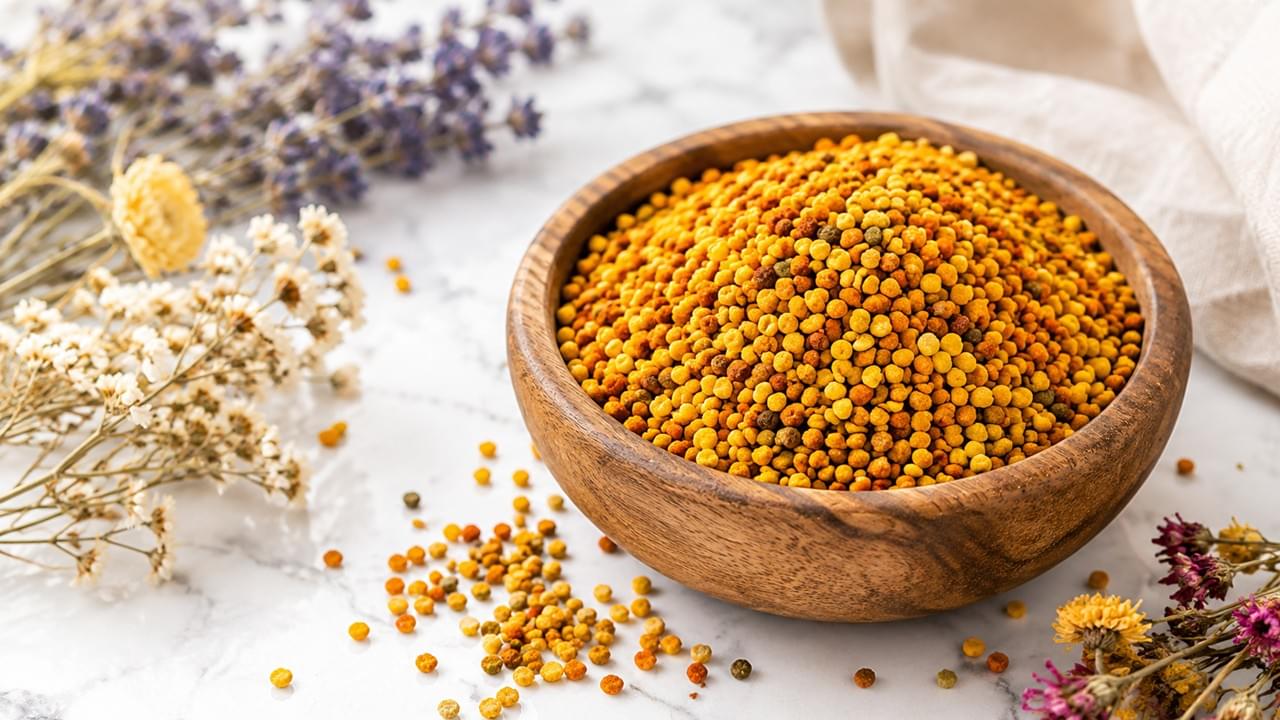
Bee pollen nutritional composition has become a major focus in the global functional ingredient market. 🌼 From sports nutrition brands to natural supplement manufacturers, companies are increasingly turning to bee pollen as a premium ingredient with strong consumer appeal and broad formulation flexibility.
For B2B buyers, however, successful sourcing requires more than marketing claims. Understanding protein content, antioxidant activity, processing methods, allergen considerations, and quality specifications is essential before integrating bee pollen into commercial products.
This guide explores how bee pollen is collected, processed, standardized, and used across modern food and nutraceutical industries while helping buyers evaluate suppliers and regulatory requirements more effectively.
🌼 What Is Bee Pollen and How Is It Collected?
Bee pollen is created when worker bees collect microscopic flower pollen and combine it with nectar and natural enzymes. The mixture forms compact pellets that are transported back to the hive in pollen baskets located on the bees’ hind legs.
Inside the colony, pollen serves as a critical protein source for developing bees. Commercially, beekeepers collect a portion of this pollen using specially designed pollen traps installed at hive entrances.
Production volumes depend heavily on floral diversity, seasonality, climate, and colony strength. During peak flowering periods, a healthy hive can typically produce between 100–250 grams of pollen daily.
To maintain freshness and prevent spoilage, pollen is harvested every day and rapidly processed after collection.
For companies exploring broader bee-derived ingredients, our Bee Products Complete Guide provides a detailed overview of commercial bee products used in food and health industries.
🧪 Bee Pollen Nutritional Composition: Why It Matters
The strong market demand for bee pollen is largely driven by its dense nutritional profile. Bee pollen nutritional composition includes proteins, amino acids, carbohydrates, lipids, vitamins, minerals, enzymes, and antioxidant compounds.
📊 Macronutrient Profile
| Component | Typical Range | Commercial Importance |
|---|---|---|
| Protein | 18–35% | Valuable for nutrition products |
| Carbohydrates | 30–45% | Natural energy source |
| Fat | 4–7% | Contains essential fatty acids |
| Fiber | 2–5% | Supports digestive positioning |
| Moisture | 3–6% (dried) | Impacts shelf stability |
The exact nutritional profile varies depending on botanical origin, geographic region, harvesting season, and drying technique.
Buckwheat pollen, rape pollen, and acacia pollen are particularly valued for their antioxidant concentrations and commercial functionality.
💪 Bee Pollen Nutritional Composition and Protein Quality
One of the most commercially attractive aspects of bee pollen nutritional composition is its protein quality. Unlike many plant-origin ingredients, bee pollen contains all essential amino acids required for human nutrition.
Key amino acids commonly identified include:
- Lysine
- Leucine
- Valine
- Phenylalanine
- Isoleucine
This balanced amino acid profile makes bee pollen protein content highly appealing for:
- Sports nutrition products 🏋️
- Functional snack bars
- Meal replacement powders
- Natural wellness supplements
However, digestibility can be influenced by the pollen wall structure known as sporopollenin. Mechanical grinding or controlled processing can improve nutrient bioavailability significantly.
Manufacturers developing functional formulations may also benefit from our guide on Honey Applications in Food Manufacturing, which explains how bee-derived ingredients enhance texture, nutrition, and consumer appeal.
🌿 Bee Pollen Nutritional Composition and Antioxidants
Bee pollen is widely recognized for its antioxidant activity. Polyphenols and flavonoids contribute to its premium positioning within the natural health sector.
Common antioxidant compounds include:
- Quercetin
- Kaempferol
- Rutin
- Isorhamnetin
Research has shown that antioxidant capacity differs according to floral source and processing conditions. Heat exposure, storage duration, and moisture levels all influence final activity levels.
According to a scientific review published by the National Center for Biotechnology Information (NCBI), bee pollen demonstrates promising nutritional and antioxidant potential across food and nutraceutical applications.
This growing scientific support continues to strengthen demand for bee pollen food industry applications worldwide.

⚙️ Processing Methods That Affect Bee Pollen Nutritional Composition
Fresh pollen naturally contains 20–30% moisture, making immediate drying essential for safety and shelf stability.
🌡️ Air Drying
Air drying at controlled temperatures between 35–45°C is the most widely used commercial method. It balances operational efficiency with moderate preservation of nutrients and enzymes.
❄️ Freeze-Drying
Freeze-drying, also called lyophilization, is considered the premium option. This method preserves sensitive bioactive compounds more effectively while extending product quality.
Although more expensive, freeze-dried pollen is increasingly preferred in premium supplement formulations and high-end wellness brands.
When evaluating a bulk bee pollen supplier, buyers should always request detailed processing documentation and moisture specifications.
📋 Bee Pollen Nutritional Composition and Quality Standards
Quality consistency is critical for industrial purchasing. Variability in moisture, microbiology, pesticides, and protein levels can directly impact product performance and regulatory compliance.
✅ Recommended Commercial Specifications
| Parameter | Standard Grade | Premium Grade |
|---|---|---|
| Moisture | ≤8% | ≤5% |
| Protein | ≥15% | ≥20% |
| Total Plate Count | ≤100,000 CFU/g | ≤50,000 CFU/g |
| Yeast & Mold | ≤1,000 CFU/g | ≤500 CFU/g |
| Pesticide Residues | EU MRL compliant | EU MRL compliant |
Reliable suppliers should also provide:
- Certificate of Analysis (COA) 📄
- Pesticide testing reports
- Heavy metal analysis
- Traceability documentation
- Microbiological testing records
For additional sourcing guidance, buyers can review our Quality Standards and Certifications resource.
⚠️ Regulatory and Allergen Considerations
Despite its nutritional value, bee pollen remains a recognized allergen. Sensitive consumers may experience reactions ranging from mild irritation to severe allergic responses.
Manufacturers should therefore implement:
- Clear allergen labeling
- Dedicated production controls
- Cross-contamination prevention systems
- Regional compliance verification
In the European Union, allergen disclosure requirements are governed under the EU Food Information Regulation.
Additionally, health claims related to immunity, anti-aging, or disease prevention are generally restricted unless specifically authorized by regulatory authorities.
🏭 Bee Pollen Food Industry Applications
Bee pollen food industry applications continue to expand as consumers seek natural, nutrient-dense ingredients.
🥤 Functional Beverage Blends
Bee pollen is increasingly used in smoothie powders, protein beverages, and wellness drinks due to its nutritional density and natural positioning.
🍫 Nutrition Bars and Snacks
Granola products, protein bars, and energy snacks often incorporate bee pollen for texture, visual appeal, and premium branding.
🍯 Honey-Based Blends
Many brands combine bee pollen with raw honey to create value-added retail products with stronger shelf differentiation.
💊 Dietary Supplements
Capsules and powdered formulations remain one of the fastest-growing categories for bee pollen globally.
Companies developing broader wellness portfolios may also benefit from reading our Health and Nutritional Impacts Guide for deeper insights into natural bee-derived nutrition products.
🚀 Final Thoughts
Bee pollen nutritional composition makes this ingredient highly attractive for modern food, supplement, and wellness brands. Its protein profile, antioxidant compounds, and natural consumer appeal continue to support strong global demand.
For B2B buyers, however, product success depends on careful supplier evaluation, processing verification, regulatory awareness, and consistent quality control.


 English
 Arabic
 French
 German
 Portuguese
 Russian
 Spanish
 Japanese
 Korean