

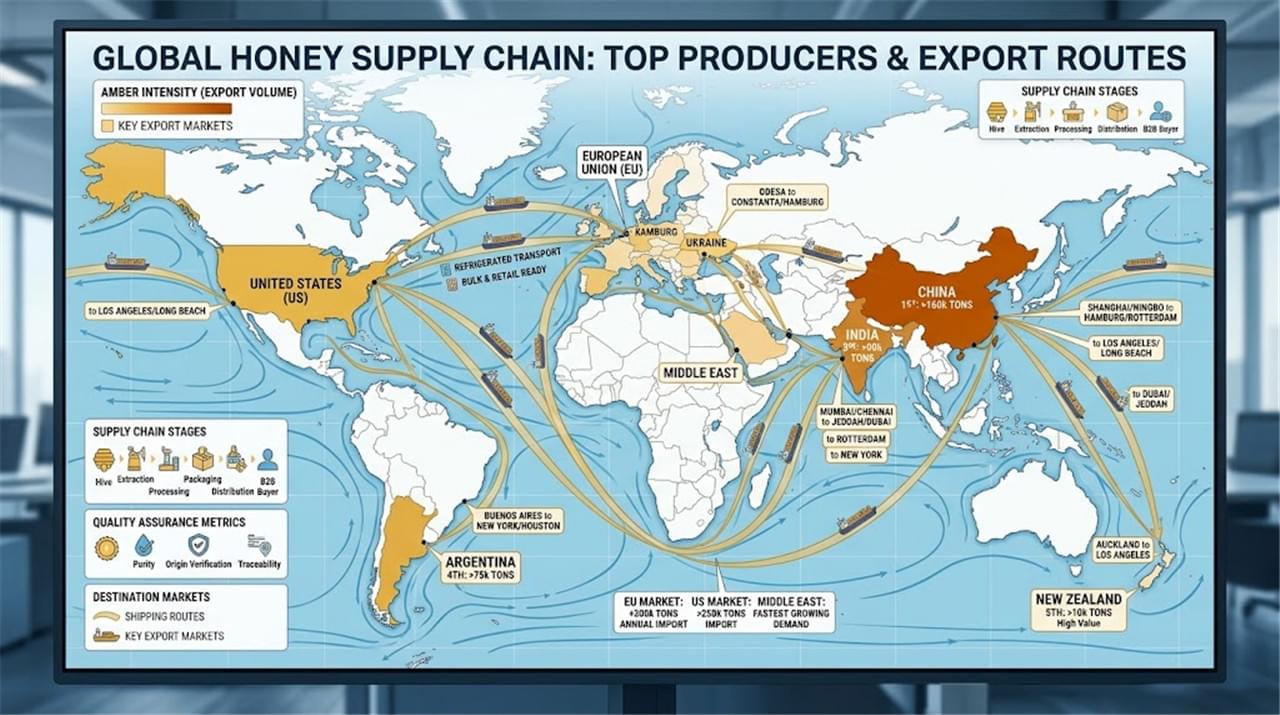
The Middle East honey market is witnessing a surge in demand, fueled by population growth, rising disposable income, and an increasing preference for natural, organic health products. For Chinese exporters, especially those like Wuhu Deli Foods, this presents a golden opportunity to expand globally while delivering high-quality honey products to a rapidly growing consumer base.
In this article, we’ll explore the import trends across major countries like Saudi Arabia and the UAE, analyze key growth drivers, and share how Wuhu Deli Foods is thriving in this dynamic market through certification, localization, and smart product strategies.
Table of Contents
Toggle📊 Saudi Arabia: A Sweet Spot for Honey Imports
Saudi Arabia has emerged as the largest honey importer in the Middle East, importing over 14,210 tons of natural honey in 2021. In 2024, the country saw a dramatic 128.57% increase in honey and royal jelly imports from China, making it a key destination for Chinese honey exporters.
Wuhu Deli Foods has seized this momentum. By offering Halal-certified, multi-floral and linden honey, the company has built strong B2B ties with Saudi distributors. Its honey is now featured on retail shelves in Riyadh and Jeddah, thanks to tailored packaging, competitive pricing, and consistent quality that meets local health regulations.
🛍 UAE Market: High Quality, High Expectation
The UAE honey demand is equally robust. In cities like Dubai and Abu Dhabi, consumers demand not only premium taste but also functional benefits. Honey-based skincare and health products are gaining popularity alongside traditional honey.
Wuhu Deli Foods began exporting to the UAE in 2022 and has since:
- Gained Halal certification for all exported products.
- Partnered with retailers like Lulu, Carrefour, and Spinneys.
- Launched custom tube-packed and glass jar honey lines to suit retail and gifting preferences.
In 2023, the company reported a 28% year-over-year export growth to the UAE, with tube-packed honey as the top performer among young urban professionals.
🏙 Emirate-Level Opportunities: The 7-Emirate Strategy
Each of the UAE’s seven emirates offers distinct opportunities. Here’s how the honey market plays out:
| Emirate | 2025 Demand (est.) | Import Ratio | Market Focus |
| Abu Dhabi | 800 tons | 70% | Organic and high-end jars |
| Dubai | 1200 tons | 65% | Variety, health-focused |
| Sharjah | 500 tons | 50% | Traditional honey |
| Ajman | 300 tons | 40% | Safety-conscious, affordable |
| Umm Al Quwain | 200 tons | 60% | Import-reliant |
| Ras Al Khaimah | 400 tons | 55% | Tourism gifts |
| Fujairah | 350 tons | 50% | Price-sensitive quality |
Wuhu Deli Foods tailors its products based on these market insights, offering:
- Small-batch gift boxes in Ras Al Khaimah,
- Economy packs in Ajman, and
- High-end linden honey in Abu Dhabi.
🚀 Wuhu Deli Foods: A Chinese Export Success in the Middle East
Here’s how Wuhu Deli Foods has secured a leading role among Chinese honey exporters in the Middle East:
- ✅ Localization: Halal-certified products with Arabic labeling.
- ✅ Packaging Innovation: Glass jars, tube packs, and customizable B2B solutions.
- ✅ Retail Integration: Available in top-tier retailers and online stores like Amazon.ae and Noon.
- ✅ Cultural Awareness: Incorporating regional tastes like date-flavored honey and Ramadan gift editions.
By 2024, Wuhu Deli Foods has shipped over 600 tons of honey to the Middle East, a 35% increase from the previous year.
📈 Key Drivers Behind Market Growth
- Health and Wellness Boom: Consumers are turning to honey as a natural alternative to sugar and synthetic supplements.
- Cultural Fit: Honey is culturally significant in Islamic tradition, increasing its demand during religious events like Ramadan and Eid.
- Economic Readiness: With rising incomes, the appetite for premium and imported honey is stronger than ever.
- E-commerce Expansion: The rise of cross-border e-commerce simplifies access to global brands like Wuhu Deli Foods.
🧭 Strategic Tips for Exporters Entering the Market
For businesses looking to join the Middle East honey boom, here’s what works:
- 🔍 Know Your Emirate: Tailor your product lines to local preferences.
- 📦 Offer Flexible Packaging: Cater to both retail consumers and wholesale buyers.
- 📜 Prioritize Certification: Halal, ISO, and organic certifications boost buyer trust.
- 💬 Engage Culturally: Align your branding with local values and festivals.
📝 Conclusion
The Middle East honey market is not just growing—it’s transforming. With diverse consumer preferences, premium positioning, and rising awareness of natural health products, this region offers fertile ground for export-ready businesses.
Wuhu Deli Foods proves that success lies in understanding local nuances, delivering consistent quality, and building trust through certification and thoughtful marketing.
As 2024 unfolds, the sweet spot for honey exports is clearly marked on the Middle East map—and Chinese exporters are just getting started.

 English
 Arabic
 French
 German
 Portuguese
 Russian
 Spanish
 Japanese
 Korean