
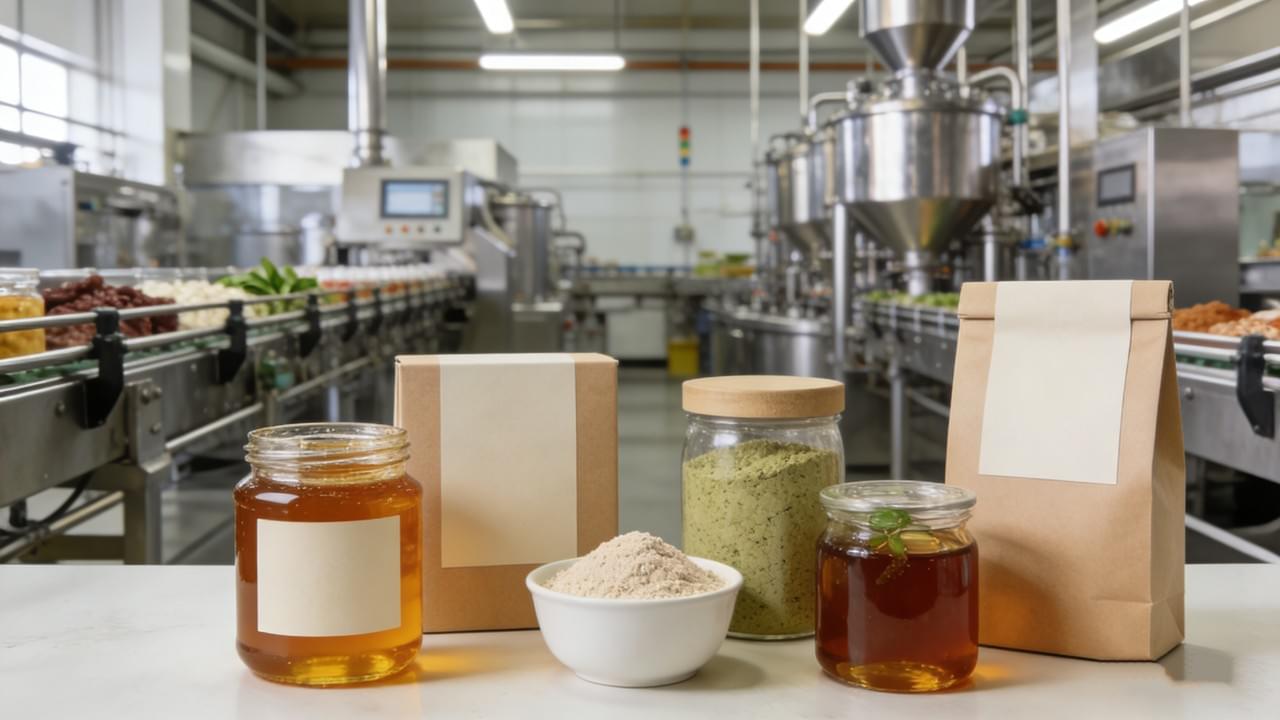
Private Label Food Manufacturing has become a strategic growth engine for food brands, retailers, and importers worldwide. In a market shaped by clean labels, plant-based nutrition, and fast-changing consumer expectations, speed and flexibility matter more than ever. Yet moving from a product idea to a shelf-ready item requires more than ambition—it requires the right manufacturing partner.
This guide walks through seven practical steps that show how Private Label Food Manufacturing, supported by free OEM and ODM services, helps brands launch smarter and scale with confidence.
Table of Contents
Toggle🔍 Step 1: Why Private Label Food Manufacturing Matters Today
Private Label Food Manufacturing gives brands control over formulation, pricing, and positioning. Unlike traditional sourcing, it allows faster response to trends while protecting brand identity.
Retailers and emerging brands increasingly choose private labels to improve margins and reduce dependency on national brands. However, without experienced support, challenges like formulation delays and compliance risks quickly surface.
🧪 Step 2: Turning Concepts into Real Formulas with ODM Support
A strong product idea needs technical grounding. Through free OEM ODM food services, experienced manufacturers help translate concepts into stable, market-ready formulations.
This stage typically includes ingredient selection, flavor balance, and functionality testing—critical for products such as honey-based foods, plant proteins, or organic syrups. ODM support shortens R&D cycles and reduces costly trial-and-error.
👉 Learn more about formulation capabilities on the official manufacturer site:
https://www.delimfg.com/
⚙️ Step 3: Private Label Food Manufacturing Without Heavy Investment
One of the biggest advantages of Private Label Food Manufacturing is avoiding upfront production costs. Brands do not need to invest in factories, equipment, or in-house teams.
By working with a custom food manufacturing partner, companies gain access to scalable production while keeping budgets flexible. This is especially valuable for testing new SKUs or entering unfamiliar markets.
🛡️ Step 4: Compliance and Food Safety Are Built In
Food safety is non-negotiable in Private Label Food Manufacturing. Established manufacturers operate under strict quality systems that support traceability, audits, and international regulations.
This built-in compliance helps brands avoid delays, recalls, and reputational damage—especially when exporting to regulated markets such as the U.S. or EU.
🔗 External reference on food safety standards:
https://www.fda.gov/food/food-safety-modernization-act-fsma/federalstate-integration-and-fsma
📦 Step 5: Packaging That Supports Shelf Performance
Packaging is more than appearance—it affects stability, logistics, and compliance. In Private Label Food Manufacturing, packaging compatibility is addressed early to prevent downstream issues.
From bulk formats to retail-ready packaging, experienced partners ensure the product performs consistently across transport, storage, and retail display.
🚚 Step 6: Stable Supply Chains for Long-Term Growth
Supply chain volatility remains a major concern in the food industry. Reliable Private Label Food Manufacturing depends on strong sourcing networks and sufficient production capacity.
Manufacturers with global export experience provide predictable lead times and consistent quality, allowing brands to scale without supply disruptions.
🤝 Step 7: Choosing the Right Private Label Food Manufacturing Partner
Not all partners are equal. The right Private Label Food Manufacturing partner offers more than production—they provide technical insight, regulatory support, and long-term stability.
Brands should look for transparency, proven export experience, and the ability to adapt to changing market needs. This partnership mindset often determines whether a private label succeeds beyond its first launch.
⭐ Final Thoughts: From Idea to Shelf, Done Right
Private Label Food Manufacturing is no longer just an alternative—it is a competitive strategy. With the right partner, brands can reduce risk, shorten timelines, and build products that stand out in crowded markets.
By combining free OEM/ODM support, compliance expertise, and scalable supply, Private Label Food Manufacturing turns ideas into shelf-ready success—efficiently and sustainably.


 EN_US
EN_US AR
AR FR
FR DE
DE PT
PT RU
RU ES
ES JA
JA KO
KO