
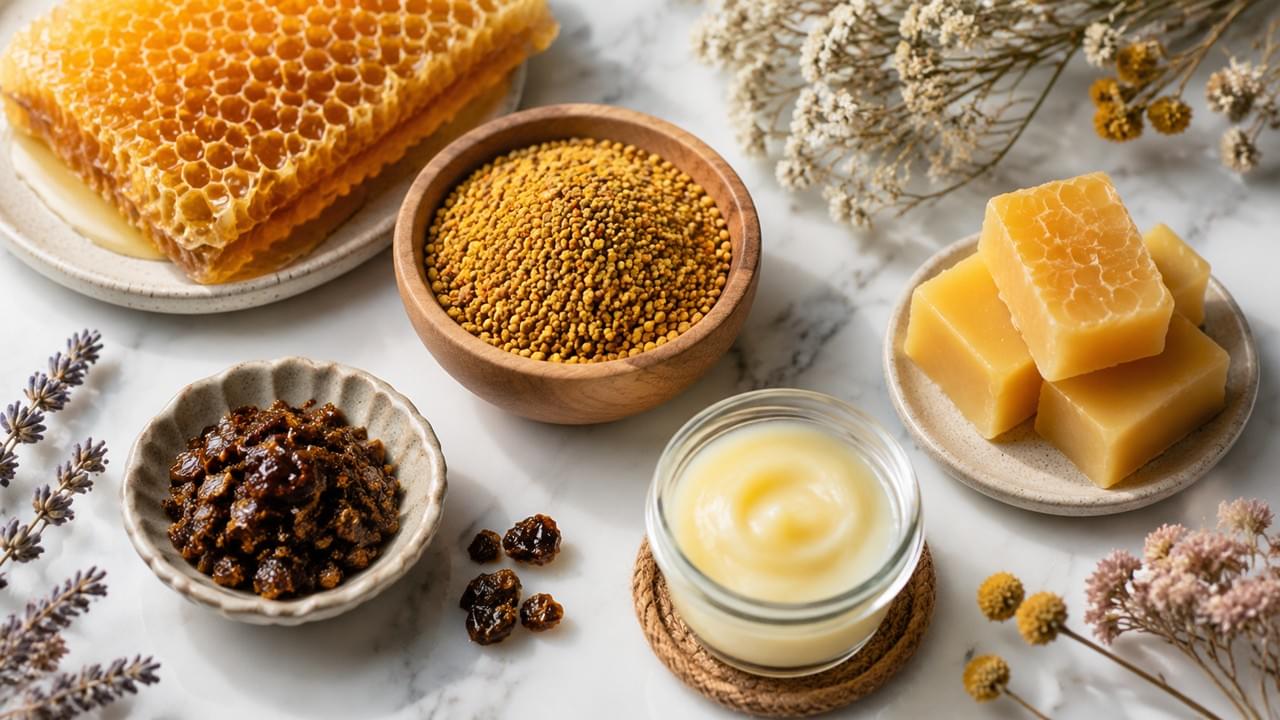
ほとんどの専門家が養蜂場の生産量を評価する際、蜂蜜に注目します。しかし、蜂蜜は実際には、適切に管理された巣箱から生み出される商業的価値の半分以下であることをご存知でしょうか? B2B向け蜂製品, 蜂由来の二次原料への事業多角化は、食品、栄養補助食品、医薬品、化粧品分野において戦略的な優位性をもたらす。.
花粉、プロポリス、蜜蝋、ローヤルゼリーといったこれらの物質はそれぞれ高級市場で高い評価を得ていますが、取り扱い方法や品質基準はそれぞれ異なります。このガイドでは、実績のあるこれらの天然由来の有効成分を、貴社の原料ポートフォリオに組み込むために必要な技術的・商業的な枠組みを提供します。これらの強力な成分が、貴社の製品ラインをどのように変革できるかを見ていきましょう。.
1. 🐝 蜂花粉の栄養プロファイル:B2B向け必須蜂製品
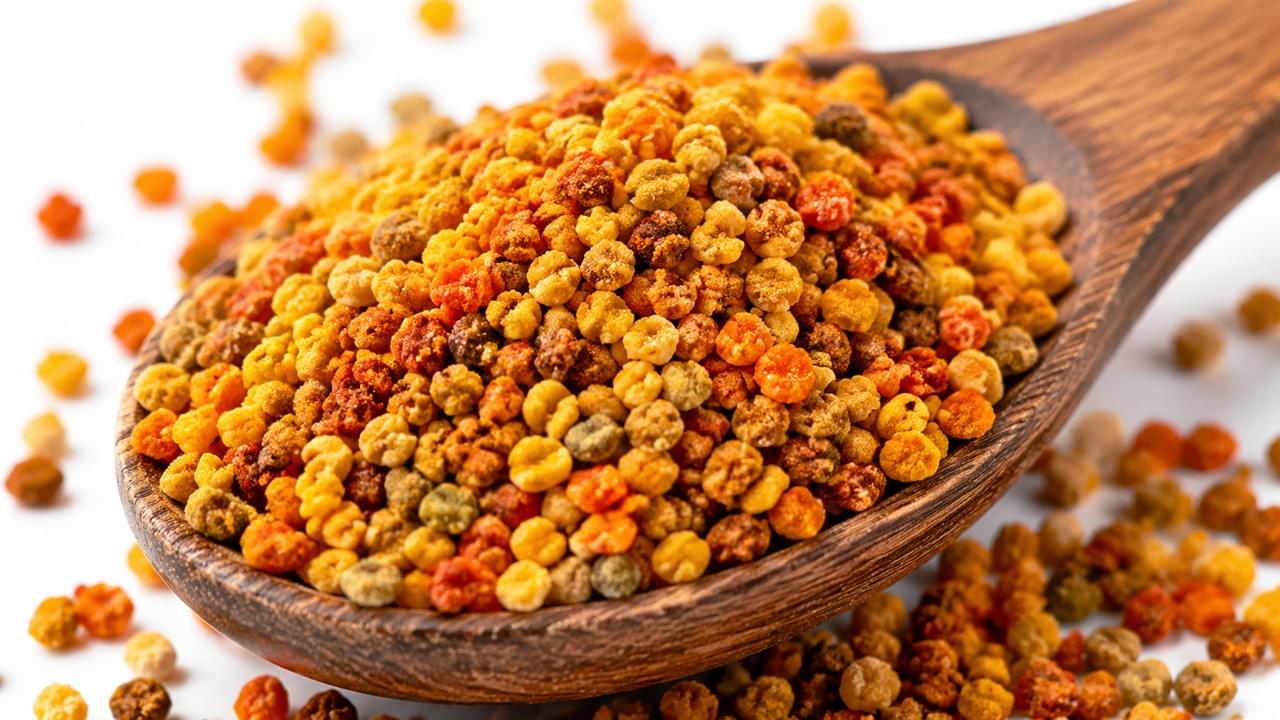
「栄養の宝庫」とも呼ばれるミツバチ花粉は、働きバチが蜜と酵素を使って花粉を圧縮してペレット状にしたものです。蜂蜜とは異なり、花粉は植物由来の製品であり、ミツバチは主に花粉を集める役割を担っています。.
栄養成分は非常に豊富だが、地域によって大きく異なる。一般的には以下のものが含まれる。
* 炭水化物: 30–45%。.
* タンパク質: 20–35%は、必須アミノ酸をすべて含んでおり、植物由来の原料としては珍しい。.
* ビタミンと抗酸化物質: ビタミンB群、ビタミンC、そしてケルセチンやルチンなどのフラボノイドが豊富に含まれている。.
工業用途では、ミツバチ花粉は 食品および化粧品用の蜂由来成分. エナジーバーやスムージーによく加えられる。 あるいは、ロイシンやリジンといった筋肉をサポートするアミノ酸が含まれているため、スポーツ栄養学の分野でも利用されている。.
⚠️ 調達に関する注意: 花粉は酸化しやすいため、鮮度を保つことが非常に重要です。2~3年の保存期間を確保するためには、サプライチェーンにおいて凍結乾燥または厳格な低温流通システムを採用するようにしてください。.
2. 🛡️ プロポリス抽出物がB2Bにとって重要な蜂製品である理由
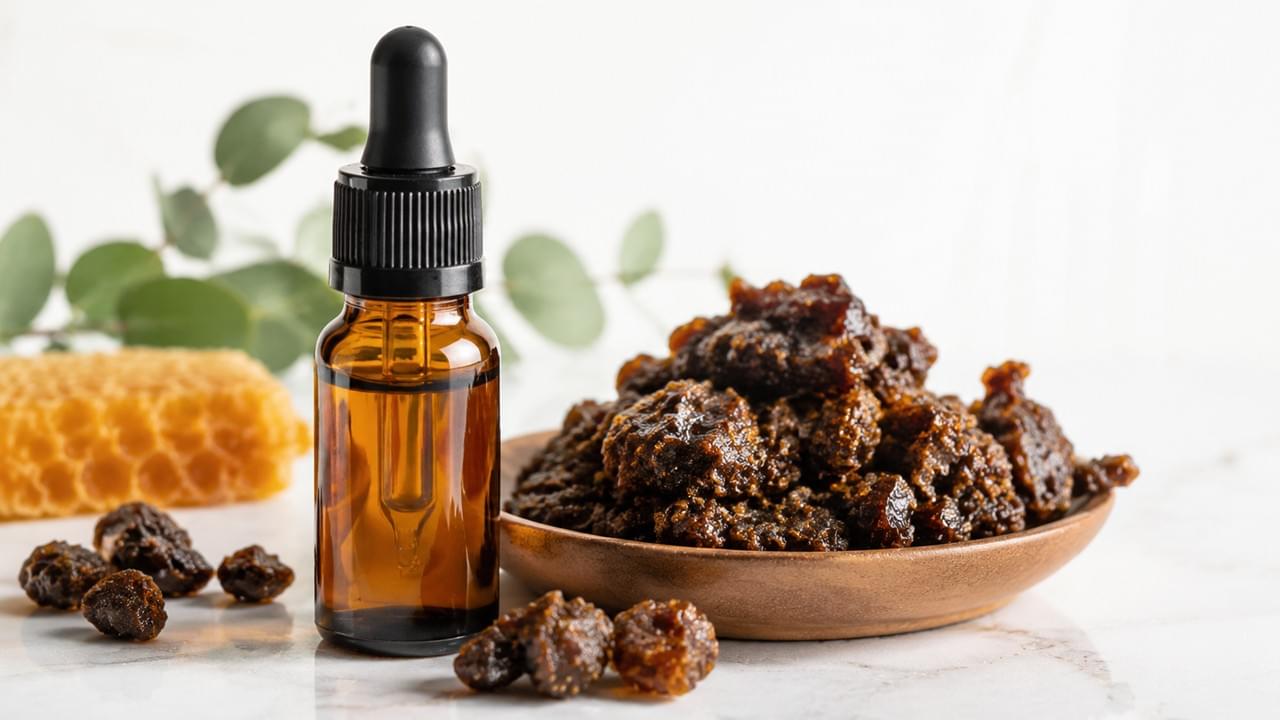
プロポリス、別名「蜂の接着剤」は、ミツバチが巣を消毒・保護するために使用する樹脂状の混合物です。自然界で最も強力な抗菌物質の一つとして知られています。.
調達における主な課題 B2B向け標準化プロポリス抽出物 地理的なばらつきもその一つです。例えば、ブラジル産のグリーンプロポリスは、ヨーロッパ産のポプラ由来のプロポリスとは全く異なる活性特性を持っています。.
* 主要な生理活性物質: CAPEなどの特定のマーカーで標準化された抽出物を探してください。 抗炎症作用を謳う場合、または抗酸化作用を謳う場合、総フラボノイド量。.
* アプリケーション: 栄養補助食品に広く使用されている , マウスウォッシュなどの口腔ケア製品、そして 食品保存研究 クリーンラベル処方向け。.
3. 🕯️ ミツロウの産業的多様性:B2B向けミツバチ製品
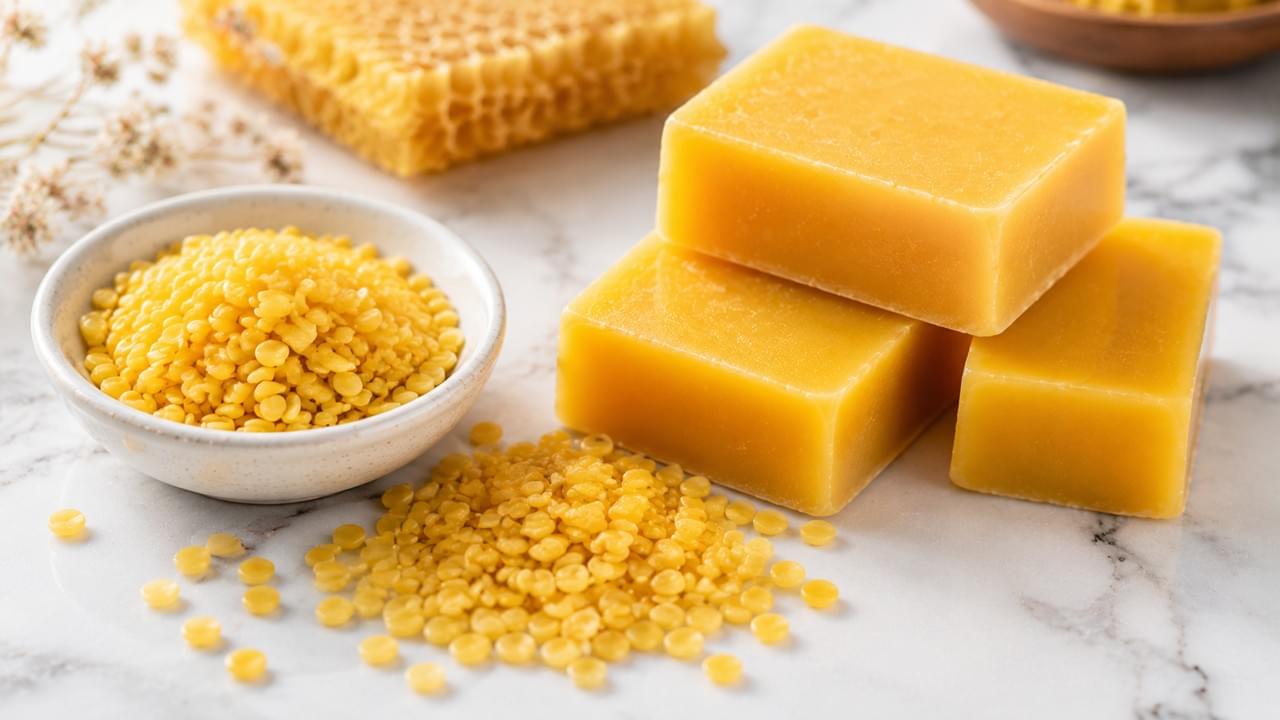
ミツロウは、ミツバチが巣を作るために分泌する複雑な脂肪酸混合物です。融点は62~64℃で、天然の耐水性と無毒性を備えています。.
世界的に安全な食品添加物として認められている。 . その産業用途は多岐にわたる。
* 食品・菓子類: 果物の水分損失を抑えるための食用コーティング剤として、またグミキャンディーの艶出し剤として使用される。.
* 医薬品・化粧品: リップクリームの増粘剤として、また薬剤の徐放性コーティング剤として作用する。.
調達する際は、 EU食品添加物E904ミツロウ規制 純度に関して。パラフィンによる混入はよくあるリスクであり、示差走査熱量測定 品質検証にはテストが不可欠である。.
4. 👑 ローヤルゼリー:B2B向けプレミアムグレードの蜂製品
ローヤルゼリーはミツバチの巣の「至宝」であり、女王蜂だけが食べる。女王蜂の長寿は、高級サプリメントやアンチエイジング市場にとって強力なマーケティング材料となっている。.
のために 高品質のローヤルゼリーの調達, 業界は、10-HDAという独自の脂肪酸に注目している。.
* 品質指標: 標準的なローヤルゼリーには少なくとも1.4% 10-HDAが含まれている必要があり、プレミアムグレードでは2.0%を超えます。.
- ロジスティクス: これは最も繊細なものです B2B向け蜂製品. 凍結乾燥製品でない限り、コールドチェーンは必須です。 , これにより、賞味期限を24ヶ月まで延ばすことができます。.
最新情報を確認できます ローヤルゼリー10-HDA研究 その神経保護作用および抗炎症作用の可能性を理解するため。.
5. 📦 戦略的調達とサプライチェーンマネジメント
調達のための強固な戦略を構築する B2B向け蜂製品 単にベンダーを見つけるだけでは不十分で、技術的なパートナーシップが必要となる。.
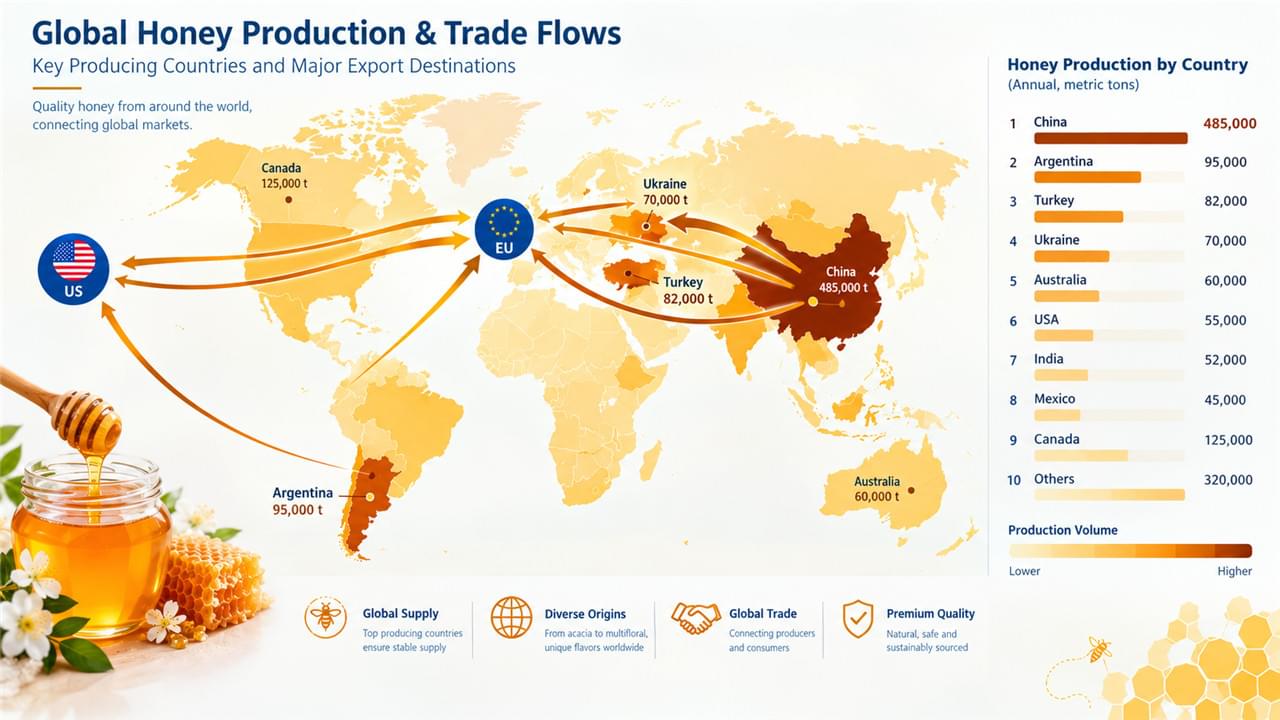
* 地理的集中度: 中国は世界のローヤルゼリー生産量の901トン以上を占めていることに留意すべきである。一方、ニュージーランドやブラジルといった特定の地域は、それぞれマヌカとグリーンプロポリスの市場を支配している。.
* コンプライアンス: 必ず分析証明書を要求する また、蜂蜜の品質基準と認証を確認し、製品が世界的な安全基準を満たしていることを確認してください。.
- 季節性: これらは農産物です。価格変動を避けるため、収穫サイクルに合わせて在庫計画を立ててください。.
これらの成分がより広範なカタログの中でどのように位置づけられるかを確認するには、当社の グローバルソーシングガイド または、 食品・飲料における蜂蜜の応用 処方開発のインスピレーションとして。.
ブランドの次のステップ
あなたが興味を持っているかどうか 天然甘味料の健康および栄養への影響 または特定の ハチミツの種類と生産方法, 私たちはお手伝いいたします。.
革新を起こす準備はできていますか? サンプルに関するお問い合わせ 本日中に、当社の養蜂製品カタログと技術仕様書全文をお送りいたします。.
 English
 Arabic
 French
 German
 Portuguese
 Russian
 Spanish
 Japanese
 Korean